

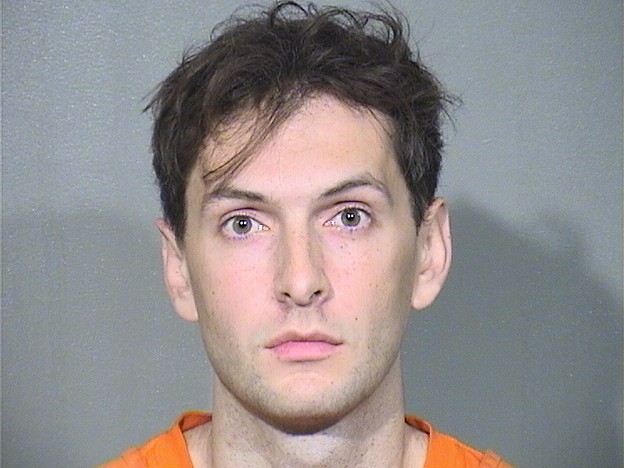
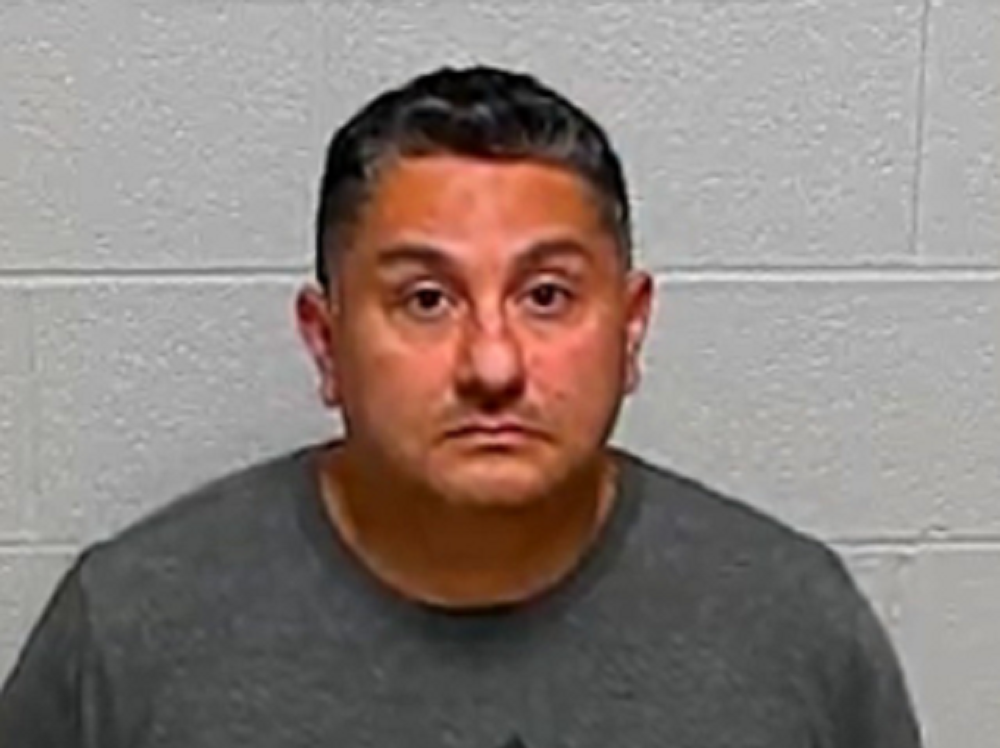
A judge in Chicago’s northwest suburbs on Sept. 25 ordered John M. Anderlik, a 27-year-old middle school teacher and coach, held in jail until trial on charges of disseminating and possessing child sexual abuse material, according to the McHenry County State’s Attorney’s Office. Three days earlier, police in Mundelein, a village of about 31,500 people northwest of Chicago, had arrested Dagoberto Diaz, 48, a middle school teacher and high school junior varsity volleyball coach, on a charge of secretly recording a minor, after a student reported seeing a flash from his phone, police said.
The two cases test a question every state answers on its own: which crimes against children should follow an offender onto a public sex-offender registry. In Illinois, the answer depends on where a crime sits in the criminal code, and the recording charge Diaz faces sits outside the chapter on sex offenses.
A Republican state senator from the area, Darby Hills, has cited both arrests to push a bill she says would close a loophole in that system, the Lake and McHenry County Scanner reported. The statutes and the bill’s own text show the gap is real but narrower than the pitch. Illinois already takes the teaching license of an educator convicted of the recording charge. What it does not do is put that person on the registry. And the bill, as written, would apply to neither man.
Both men are presumed innocent. Neither man’s court docket shows a plea.
Where this is happening
Both cases come from the suburbs north and northwest of Chicago. Lake County, Illinois, home to about 714,000 people, covers the state’s northeastern corner along Lake Michigan, directly north of Chicago’s Cook County.
Diaz taught at Carl Sandburg Middle School in Mundelein and coached at Mundelein High School. The two schools belong to separate elementary and high school districts that share one superintendent. Anderlik taught at Matthews Middle School in Island Lake, a smaller town in western Lake County served by Wauconda School District 118. He lives in Crystal Lake, in neighboring McHenry County, which is where he was arrested and where his case was filed.
What the record shows
Anderlik’s case rests on court records. His McHenry County docket, case 2026CF000860, shows a Crystal Lake police complaint filed Sept. 24 with two Class X felony counts of disseminating child sexual abuse material, each dated Aug. 21, and two Class 2 counts of possessing it, each dated Aug. 18. The State’s Attorney’s Office says Judge Jennifer L. Johnson granted the state’s petition to hold him before trial. Dissemination involving a child under 13 carries 6 to 30 years in prison under Illinois law.
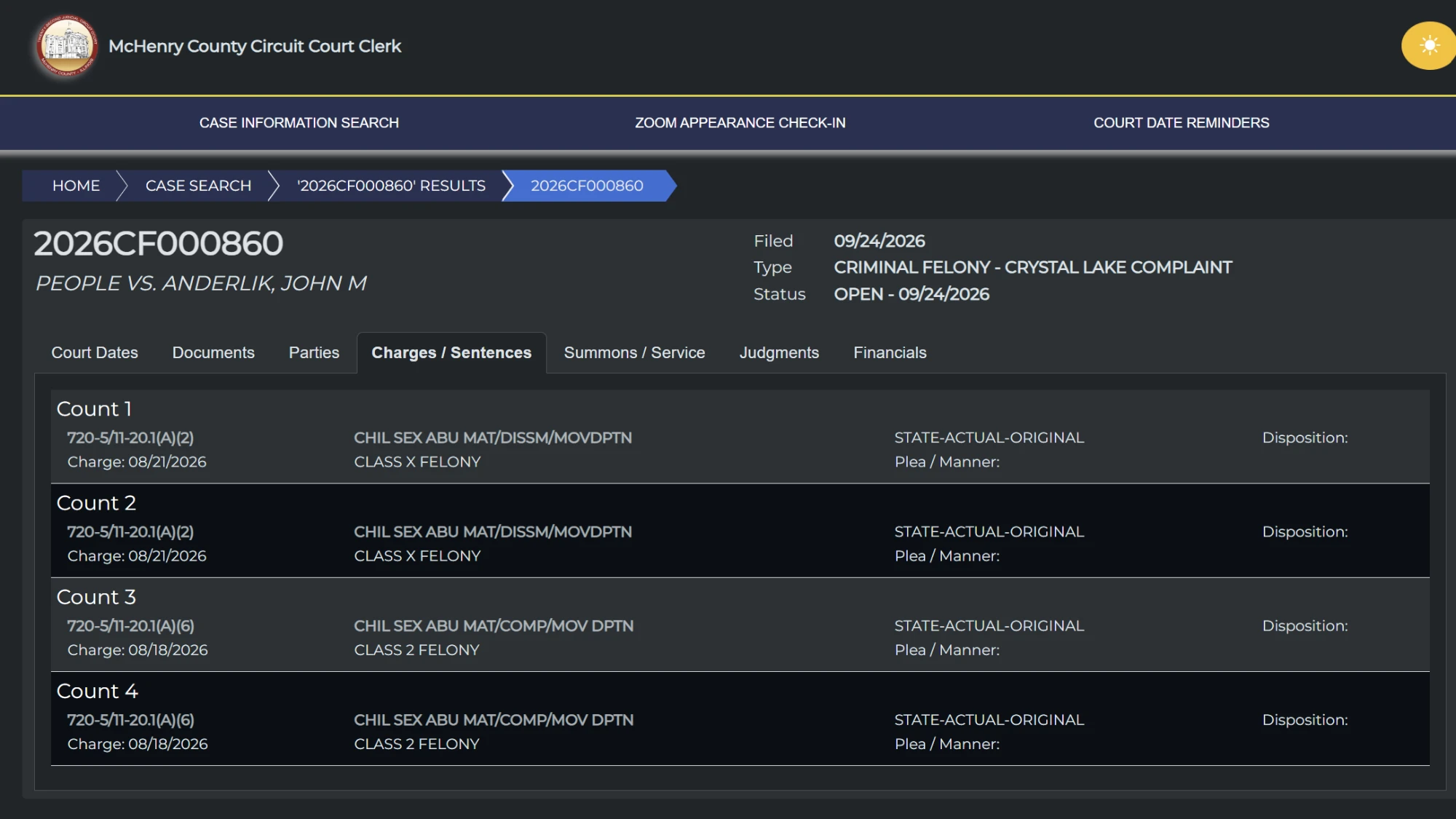
Prosecutors allege Anderlik used a Snapchat account to send and receive child sexual abuse material, and that Crystal Lake police opened their investigation after a Sept. 8 tip from the National Center for Missing & Exploited Children about an August upload of a video involving a prepubescent child, according to the State’s Attorney’s Office. At his detention hearing, prosecutors said he shared two videos depicting a prepubescent boy, according to the Scanner’s account of the hearing. Prosecutors also allege that in a conversation with another person, he described teaching as “perfect” for furthering a desire to engage in sexual acts with prepubescent children, the State’s Attorney’s Office said. He is not charged with physical contact with any child, and no public record links the children in the videos to his schools.
Diaz’s case also rests on a court record. His Lake County docket, case 2026CF00002086, shows prosecutors filed the charge and obtained a warrant on Sept. 21. The single count, which the docket describes as recording under the clothing of a victim under 18, is a Class 3 felony, and it lists an offense date of July 10. That is more than five weeks before the report police have described. Police said school administrators told them on Aug. 18 that a student saw a flash from Diaz’s phone after he took her into a room for stretching exercises, and that the student told staff immediately, Fox 32 reported. Police said a forensic search of the phone found images and videos that corroborated the student’s suspicion, according to Patch. The public record does not say whether the July 10 count involves that student.
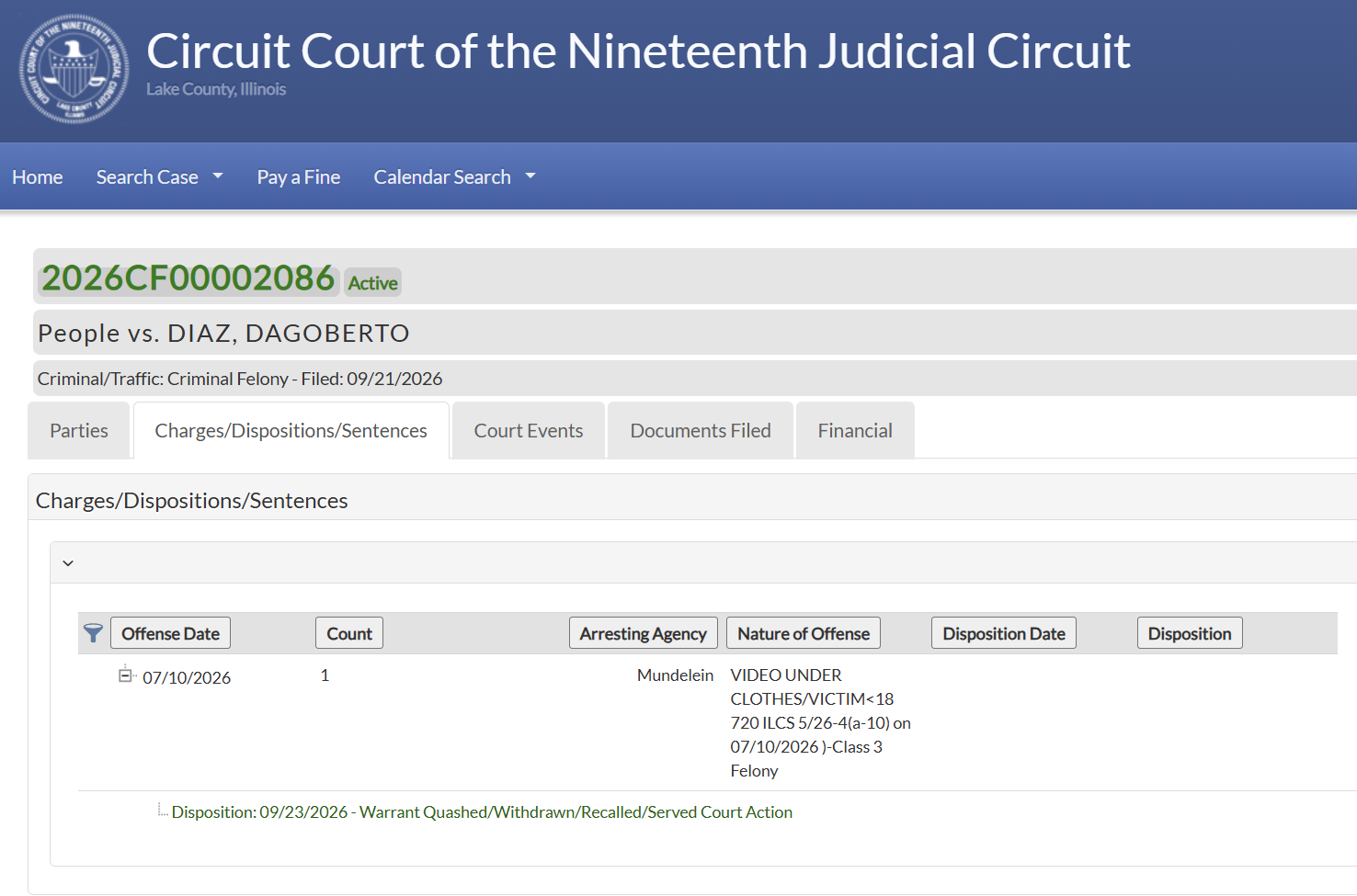
At Diaz’s first court appearance on Sept. 23, a Lake County prosecutor said he is accused of taking upskirt photographs of multiple minor victims, according to the Scanner. The docket still shows one count. The judge ruled that state law did not allow Diaz to be held before trial, the Scanner reported. His release conditions, listed on the docket, require him to report to pretrial services, keep a curfew set by pretrial services of no more than 11 hours a day, stay out of schools, parks and daycares, have no contact with minors other than his own children, hand over his devices and passwords for search on request and possess no pornography. Superintendent Corey Tafoya said staff immediately alerted police and the state’s child welfare agency, Fox 32 reported.
How Illinois sorts these cases
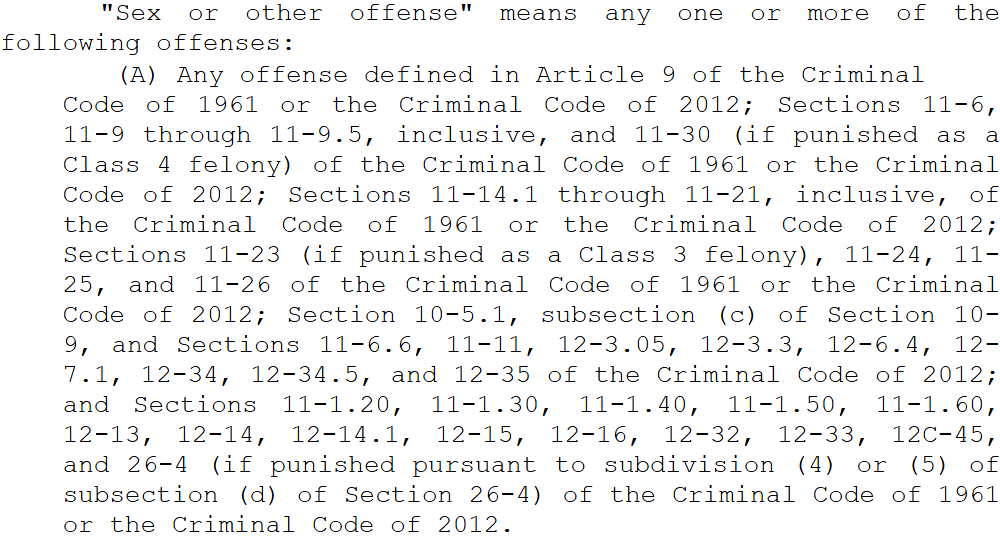
Child sexual abuse material is a sex offense, and a conviction requires registration. Secret video recording is not. The statute Diaz is charged under, 720 ILCS 5/26-4, sits in the code’s article on miscellaneous disorderly conduct crimes. A conviction does not require registration even when the recording was sexually motivated, NBC 5 Chicago reported.
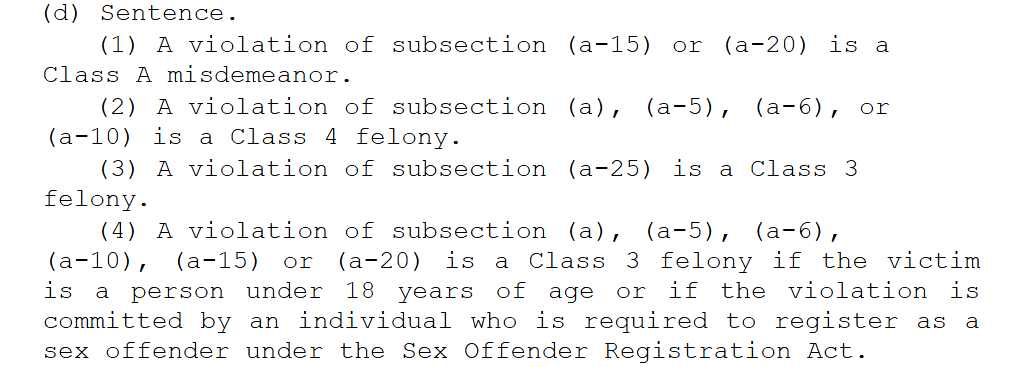
The classification has other effects. Illinois’s position-of-trust provisions, which raise penalties when a teacher or coach sexually abuses a student aged 13 to 17, apply only to sexual penetration or sexual touching. Recording a student falls outside them. The recording statute’s own penalty rises when the victim is under 18, but the offender’s job plays no part.
The time limits differ too. Illinois lets prosecutors bring the most serious contact sex offenses against children at any time. The recording offense is not on that list; beyond the general felony deadline, the law allows charges within one year after a victim discovers the recording. If investigators find images of former students, when each of them learned of it could decide whether those cases can still be charged.
One consequence the classification does not escape is the classroom. A conviction for unauthorized video recording of someone under 18 requires the state superintendent of education to suspend the person’s educator license and to revoke it once the conviction is final. Whether Diaz holds an Illinois educator license has not been confirmed in state records.
How federal law and other states draw the line
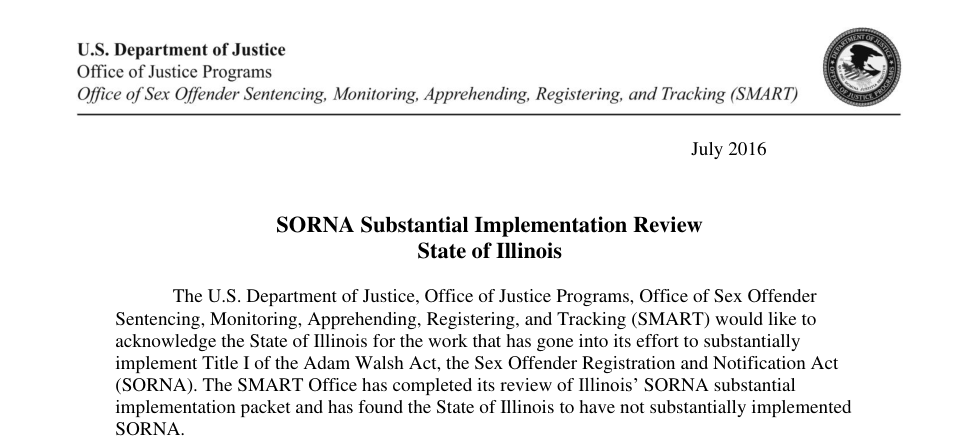
Federal law sets a national baseline for sex-offender registries. The Sex Offender Registration and Notification Act, part of the 2006 Adam Walsh Act, lists the offenses against minors that should require registration, and video voyeurism is on that list. States that fall short of the federal standards lose a share of a federal justice grant, and most have accepted that cost: the Justice Department counts 18 states that have substantially adopted them. A 2016 federal review found Illinois had not.
Some states go further than Illinois.

Louisiana requires anyone convicted of video voyeurism to register as a sex offender. Florida makes video voyeurism a second-degree felony when a school employee records a student, or when an adult responsible for a child under 16 records that child.

How often educators sexually abuse or exploit students nationally is not well measured. The most-cited estimate, a 2004 U.S. Department of Education review of a 2001 survey, found that 9.6 percent of students in grades 8 to 11 reported some form of educator sexual misconduct; teachers’ unions criticized it at the time as overbroad. In 2014, the Government Accountability Office found that no federal agency systematically tracked the problem. GAO later closed that recommendation after a 2018 federal school survey added a single question on staff sexual misconduct.
The bill and the politics
The fix Hills is promoting targets a real gap, but it is narrower than her pitch, it is contested, and it has been stuck for more than a year.
Senate Bill 2381 would put people on the sex-offender registry after a recording conviction when the victim is under 18, the offender is an adult and a court finds the offense was sexually motivated, according to the bill record]. That is the gap described above. Illinois already takes a convicted teacher’s license, but nothing makes the conviction public in places a license does not reach, such as club teams and summer camps. Hills has framed the harm the same way, as a convicted offender moving on without the public knowing, Fox 32 reported.
As amended, the bill applies only to offenses committed after it takes effect. It would not reach Diaz’s case, and Anderlik’s charges already carry registration on conviction.
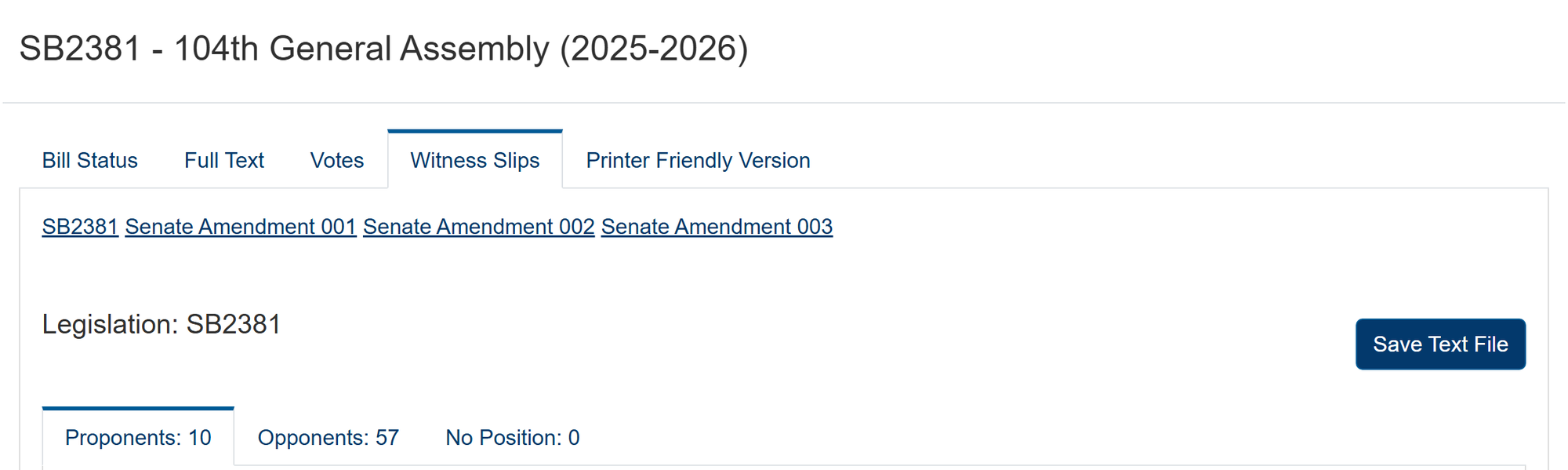
The bill cleared the Senate Criminal Law Committee 9-0 in April 2025 with sponsors from both parties. Witness slips filed with the General Assembly show 10 in support, including the Illinois Sheriffs’ Association and the Illinois State’s Attorneys Association, and 57 opposed, including the ACLU of Illinois, the Office of the State Appellate Defender and the Cook County Public Defender. An ACLU representative told the Chicago Tribune that the group takes the conduct the bill targets seriously but doubts registries work, saying there is no evidence they improve public safety and ample evidence that they damage people’s lives. Skepticism of registries is not limited to civil liberties and defense groups: the Chicago Alliance Against Sexual Exploitation, an anti-sexual-exploitation group, argued in 2019 that the registry diverts resources from survivors and prevention, the Tribune reported, in a story republished by the Daily Herald.
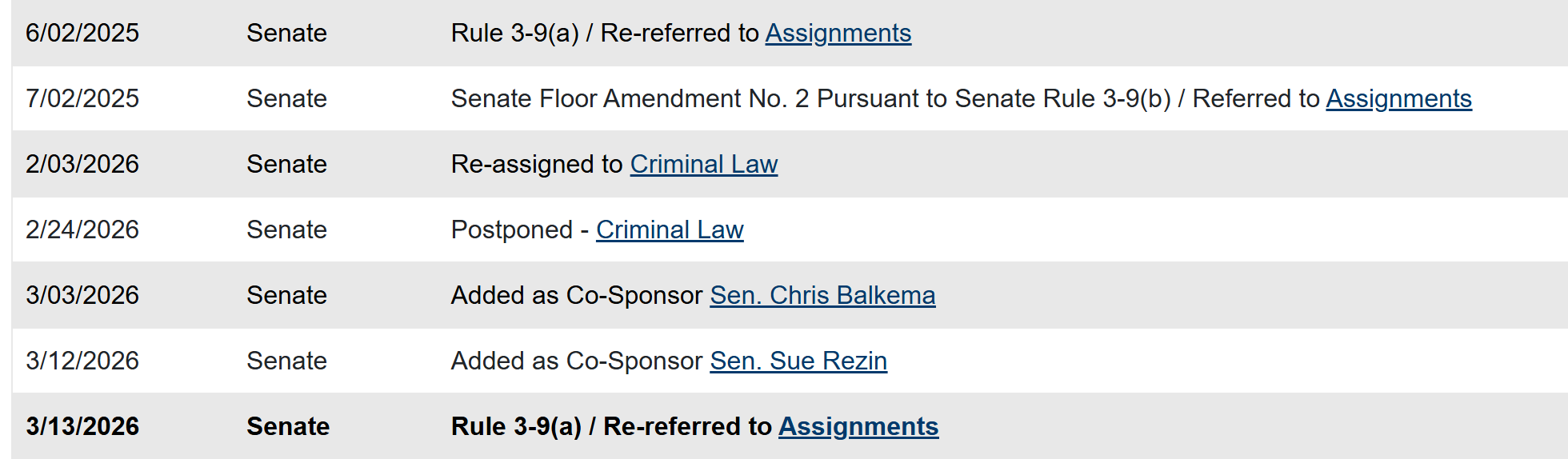
The bill went back to the Criminal Law Committee in February, was postponed at a Feb. 24 hearing, and on March 13 returned to the Assignments Committee, which decides which bills reach the floor. It has sat there since. Democrats hold 40 of the Senate’s 59 seats and chair every committee (WCIA), but the bill has Democratic co-sponsors, so the stall does not break along a simple party line. The record shows where the bill stopped, not why.
The push also comes in an election season. Hills, appointed to her seat in February 2025, faces Democratic state Rep. Nabeela Syed on Nov. 3, according to Ballotpedia, and began her petition drive about five weeks before the vote. She has also said the Chicago teacher whose case inspired the bill went on to harm children at another school, CWB Chicago reported. Court records described by NBC 5 show the teacher, Elliott Nott, pleaded guilty to unauthorized videotaping without having to register and was convicted in a separate 2024 case. They do not show a second school.
What gave them access
The record does not yet explain how either man got the access he had, but it shows several conditions.
Both held more than one role with children at the same time. Diaz taught middle school in one district and coached in another. Anderlik, a sixth-grade teacher and girls basketball coach, also coached school volleyball, directed a summer STEM camp, taught as an adjunct at a community college and coached a 12-and-under club volleyball team this spring, according to his own profiles and the club’s director, the Scanner reported. Each role came with its own screening, and no single body saw them all.
The screening looks backward. Illinois schools must run fingerprint-based state and FBI criminal history checks on new hires, and since 2023 they must review an applicant’s employment history for sexual misconduct. Those tools find a record. Nothing public suggests either man had one. Anderlik held a state teaching license and was nominated for a county early-career educator award in 2025, the Scanner reported.
Neither case surfaced through a school safeguard. Anderlik came to police attention through a tip about a Snapchat upload, prosecutors allege. Diaz came to light because a student noticed a flash and told staff, police said.
The institutions can answer what the record does not. Does Mundelein High School allow a coach to take one athlete into a closed room? Were employment history reviews completed when each man took on coaching assignments? Why does the only charge against Diaz list a July 10 offense date, more than five weeks before the Aug. 18 report, and why did another five weeks pass before his arrest? Did District 118 know about Anderlik’s teacher-branded TikTok account, which has more than 12,000 followers?
A pattern in the region
Their cases follow July charges against another area educator. Marshall Sheffer, 44, a middle school teacher in neighboring Libertyville, was charged with eight counts of child pornography, two of them Class X felonies, according to a joint release from Libertyville police and the Lake County State’s Attorney’s Office.
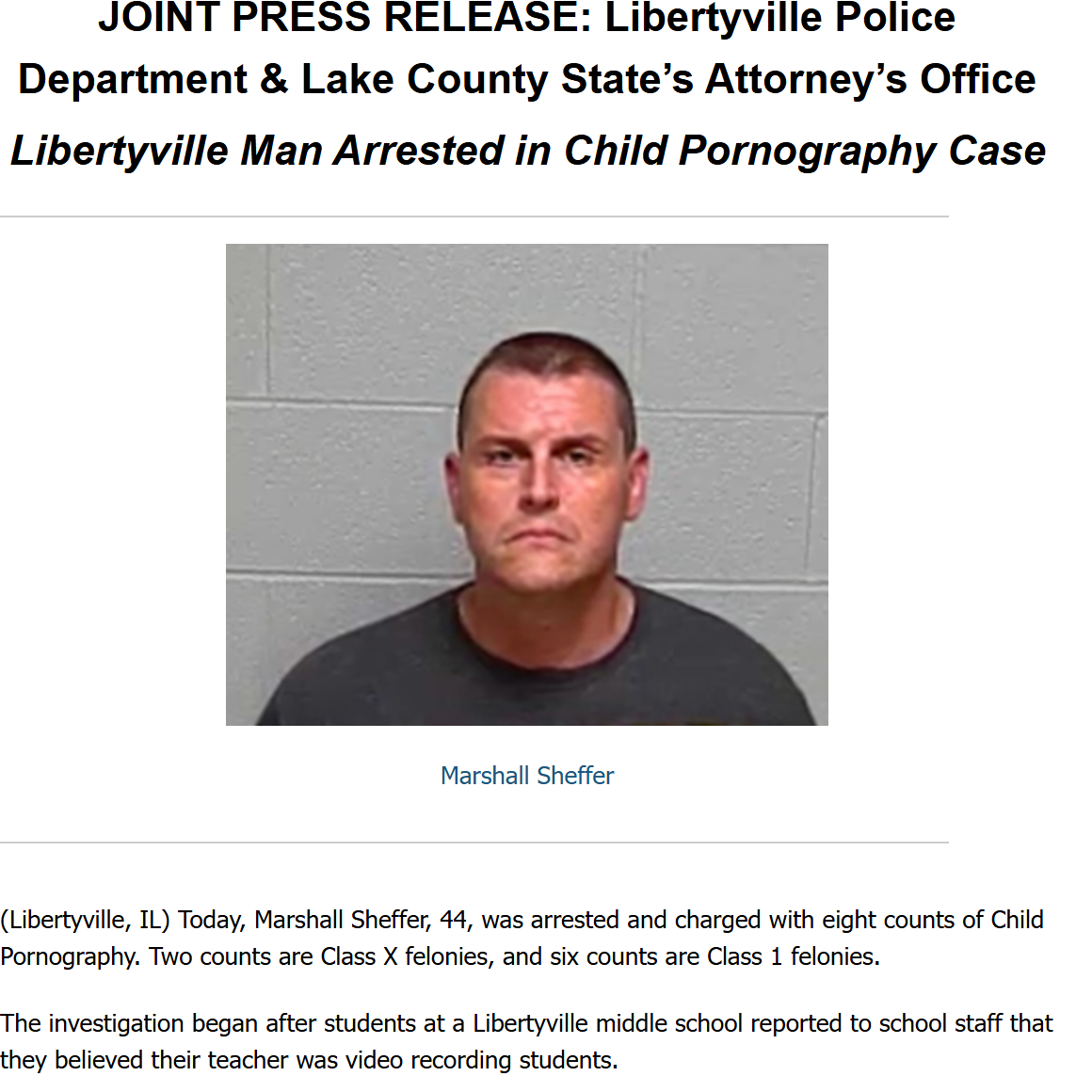
The release says the investigation began after students told school staff they believed their teacher was video recording students, and that a forensic exam of his phone found numerous images of students altered with artificial intelligence to create explicit images. He was ordered held before trial, and his school board voted to fire him on July 14, ABC7 reported. His case is pending.
What happens next
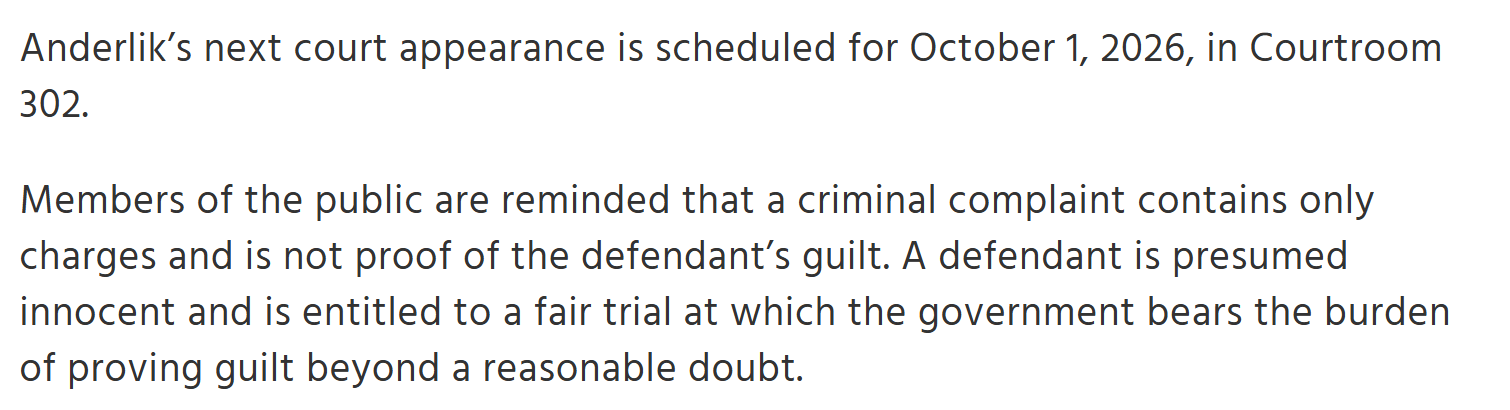
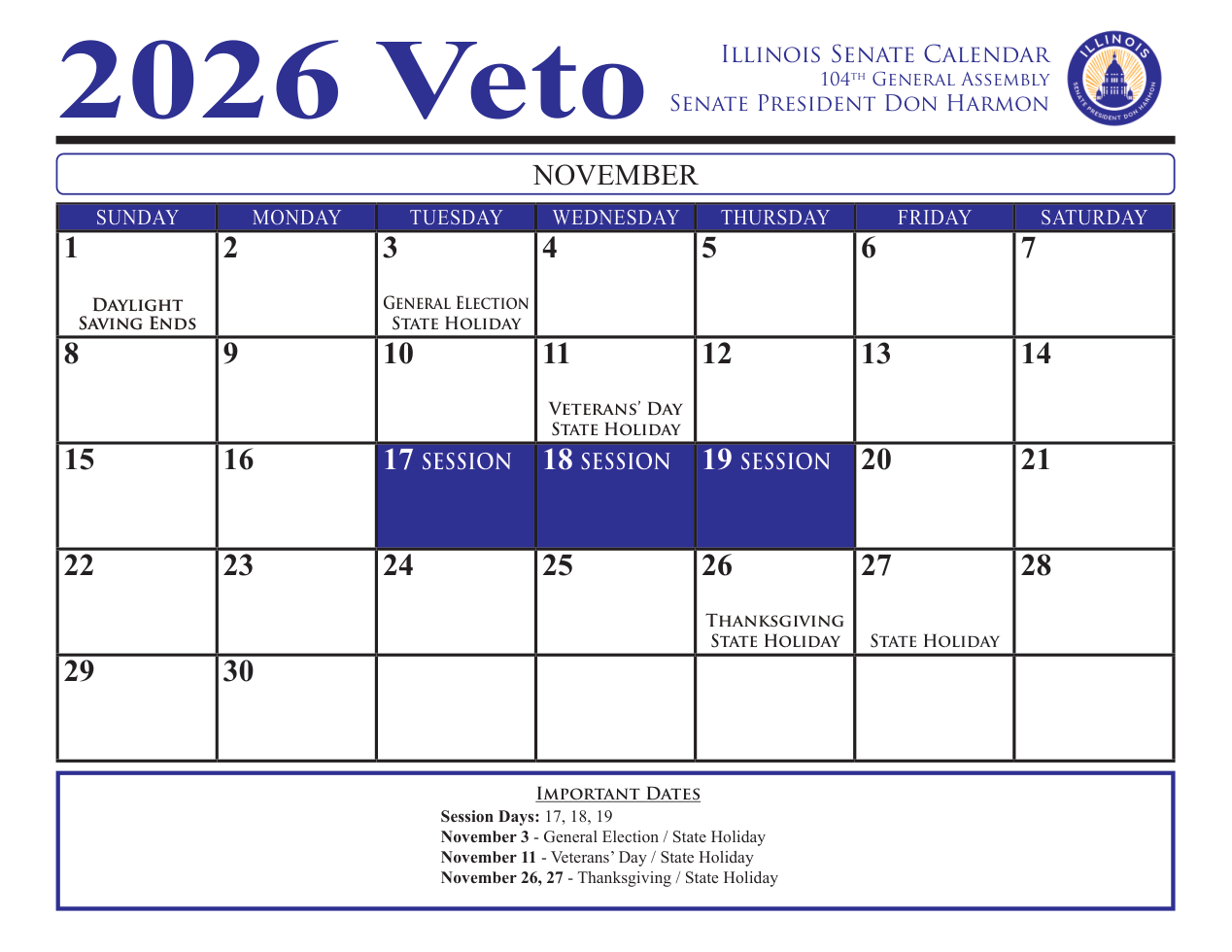
Anderlik is due in McHenry County court on Oct. 1. Diaz is due in Lake County court on Oct. 26 for a status hearing on his preliminary hearing, according to his docket. Before either felony case can go to trial, prosecutors must win a judge’s probable-cause finding at a preliminary hearing or obtain a grand jury indictment. The Illinois General Assembly’s fall veto session opens Nov. 17, two weeks after Hills and Syed face voters.
Sources
Court records
- Lake County Circuit Clerk, People v. Diaz, case 2026CF00002086
- McHenry County Circuit Clerk, People v. Anderlik, case 2026CF000860
Prosecutors, police and officials
- McHenry County State’s Attorney’s Office, release on Anderlik’s charges and detention, Sept. 25, 2026
- Lake County State’s Attorney’s Office, joint release on Sheffer’s arrest
- Sen. Darby Hills, statement of Sept. 23, 2026
- Mundelein Police Department statements of Sept. 23, 2026, as quoted by Patch, Fox 32 and the Chicago Sun-Times. The release itself has not been made public.
The bill
- Senate Bill 2381, 104th Illinois General Assembly: bill status, committee votes and witness slips
Laws
- Illinois: 720 ILCS 5/26-4 (unauthorized video recording), 720 ILCS 5/11-20.1 (child sexual abuse material), 720 ILCS 5/11-1.20 (position of trust), 720 ILCS 5/3-6 (time limits), 105 ILCS 5/21B-80 (educator licenses), 105 ILCS 5/10-21.9 (background checks)
- Other states: La. R.S. 14:283; Fla. Stat. § 810.145
- Federal: 34 U.S.C. § 20911
Reports and data
- Justice Department SMART Office: 2016 review of Illinois, grant penalties, implementation count
- Government Accountability Office, GAO-14-42
- U.S. Census Bureau QuickFacts: Lake County and Mundelein
- DePaul University Institute for Housing Studies, Lake County
- Robbins Schwartz, on the 2023 employment history review forms
News coverage
- Lake and McHenry County Scanner: Sept. 25, 2026 and Sept. 27, 2026
- Fox 32: the arrest, the superintendent’s statement and Sen. Hills
- Chicago Sun-Times
- Patch
- NBC 5 Chicago
- CWB Chicago
- ABC7 Chicago
- Hoodline
- Education Week, 2004
- WCIA and NPR Illinois on the Illinois Senate
- Ballotpedia, Darby Hills
React to this story