
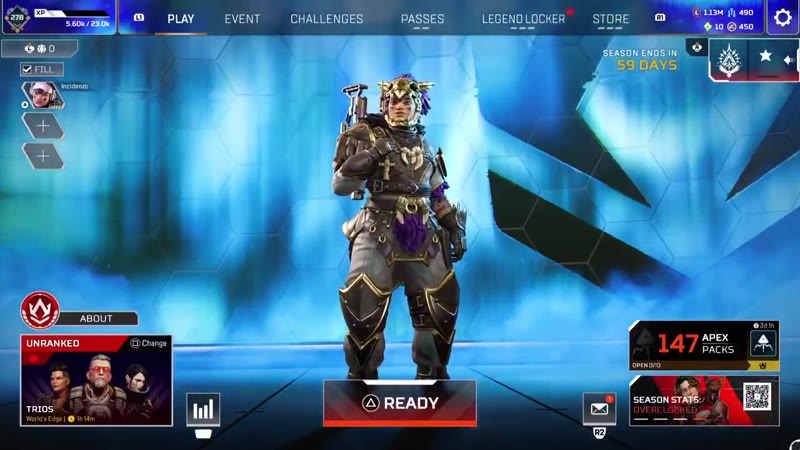
ZDT COFFEE CHAT SUNSET, MANIC, GLIZZY [ZeroDarkTony] / September 5, 2026 / YouTube / Y1V6PSNuY5o
Anthony R. D’Amato, Jr., also known as ZeroDarkTony, directed sustained name-calling at the host of Boss Talks Podcast during a September 5, 2026 YouTube livestream, addressing him by the name “Darren” and, elsewhere in the same stream, by the nickname “Slop.” HNZ has not independently confirmed “Darren” as the host’s legal or publicly used name; it is quoted here only as D’Amato’s own on-stream usage. D’Amato also spent roughly half an hour discussing what he described as an upcoming criminal hearing for Jarred Brooks, referred to on stream as “the respondent,” predicting a felony upgrade and detailing how he believed character evidence could be used against Brooks at trial.
Exhibit A
D’Amato tells the livestream audience, “you scumbags and you’re garbage and you’re only hurting people,” then addresses the Boss Talks Podcast host by the name he uses for him on stream: “Darren, eventually you’re going to catch a case. Because you want to keep going. I’m telling you, dude, you’re going to catch a case and they’re going to nail you.”
Timestamps: 00:20:55 – 00:25:39 | Open clip in new tab
There’s no legal claim here to check, just a named individual getting called a dirtbag, an idiot, and a pathological liar in the same breath as a prediction he’ll “catch a case.” D’Amato calls him “Darren” throughout; HNZ hasn’t confirmed that’s a name the Boss Talks Podcast host uses publicly, so it’s reproduced here only because D’Amato said it, not because HNZ is vouching for it. Worth noting he’s also called “Slop” elsewhere in this same broadcast, which is a lot of aliases to throw at one guy for someone D’Amato insists he’s not that focused on.
If personal insults were a crime, Zero Dark Tony would have a rap sheet a mile long.
Exhibit B
D’Amato states that Brooks “has a criminal case coming up on Tuesday” and that chats encouraging him, rather than urging him to “simmer down,” are making the situation worse. He adds: “you’re just winding up someone who is a paranoid schizophrenic, that’s it.”
Timestamps: 00:44:50 – 00:47:22 | Open clip in new tab
That diagnosis doesn’t come out of nowhere. About twenty minutes earlier in the same stream, D’Amato spent a stretch reading aloud from what he described as research on psychiatric speech patterns, “clanging,” “verbigeration,” “schizophagia,” sourced on-stream to consumer health sites like Healthline and Verywell Mind, all while repeating “I’m not necessarily speaking on one individual” and “I’m not a doctor.” Twenty minutes later, one individual gets named and diagnosed with total confidence: “there’s no doubt in my mind.” Reading a Healthline glossary out loud is not a clinical evaluation, and the disclaimer doesn’t hold up well next to the certainty that follows it.by
Exhibit C
D’Amato states his opinion that the open case “is going to get upgraded to a felony. Or at least a third-degree misdemeanor,” and adds: “that chat, that’s all they’re doing, they’re just making it easier, they’re making it easier for that judge on Tuesday to make their decision and all the public defender is going to do is try to make a plea deal…”
Timestamps: 00:48:07 – 00:50:17 | Open clip in new tab
This is at least the second stream in three days where D’Amato has floated a felony upgrade for a case that has no felony to upgrade to. As HNZ reported after the September 3 broadcast, both counts against Brooks are charged under 18 Pa.C.S. § 2709(a)(4) and (a)(7), and both are graded misdemeanor of the third degree by statute. There’s no upgrade pending because there’s nothing in the statute for the grading to upgrade into.
Worth sitting with exactly how D’Amato phrases it: “felony… or at least a third-degree misdemeanor.” “At least” implies a floor, some lesser outcome he’s conceding as a fallback if the felony doesn’t pan out. But third-degree misdemeanor isn’t a fallback from anything. It’s the actual charge on the docket, and it’s also the lowest misdemeanor grade Pennsylvania has. There is no fourth-degree misdemeanor to fall back to after that. M3 isn’t the floor of a range that includes a felony above it, it’s the floor, period, for this offense. D’Amato said the correct charge out loud and framed it as the consolation prize.
Exhibit D
D’Amato walks through what he says will happen at Tuesday’s criminal hearing: “in civil cases like an RO there’s a very limited scope on bringing up someone’s past… but in a criminal matter so on Tuesday they’re going to be able to talk there… that prosecutor is going to be able to talk about how he is a convicted felon, they’re going to be able to talk about how he has all these other orders on him.”
Timestamps: 01:08:10 – 01:12:05 | Open clip in new tab
This clip also includes D’Amato asking, “what do you think a jury is going to do?” There is no jury on Tuesday. A Pennsylvania preliminary hearing is decided by the magisterial district judge alone, under Pa.R.Crim.P. 542, ruling on whether the Commonwealth has established a prima facie case. Juries don’t enter the picture unless the case is later bound over to the Court of Common Pleas and goes to trial. D’Amato has built out an entire courtroom scene, complete with jury box, for a hearing that has neither.
The character evidence claim has its own problem. Under Pa.R.E. 404, a defendant’s character, including prior convictions, generally cannot be introduced by the prosecution to suggest he acted in conformity with it, in a criminal case exactly as much as a civil one. D’Amato has the contrast backwards. The main door that opens a defendant’s record to the jury is if he testifies and gets impeached under Pa.R.E. 609, which in Pennsylvania is limited to crimen falsi convictions, meaning dishonesty crimes like fraud or theft, not convictions generally. D’Amato himself says elsewhere in this stream that Brooks’s “only advantage” Tuesday is that he won’t be speaking. And none of this reaches Tuesday’s hearing regardless, since a preliminary hearing decides one narrow question, prima facie case or not, not character, not credibility, not sentencing. D’Amato has scripted out a trial scene for a hearing that isn’t a trial.
He really does love a good courtroom fantasy.
Exhibit E
D’Amato states he is “certainly not recording” the opposing chat for his own use because his matter with Brooks “is already done,” then adds: “the stuff that they’re saying in the chat… it’s going to be used against him 100%.”
Timestamps: 01:12:46 – 01:14:40 | Open clip in new tab
Statements a defendant makes after being served generally can be used against him, and HNZ already confirmed that principle holds up after the September 3 stream. What third parties type in an unrelated chat is a different animal. That’s not Brooks’s statement, and whether any of it becomes admissible would run through the same relevance and character-evidence rules already discussed, not blanket certainty that anything typed anywhere about someone automatically gets used against them.
Additional Claims Worth Flagging
Elsewhere in the same broadcast, D’Amato says, “the possibility here if it’s upgraded to a felony is seven years, seven years… there’s a very good chance of that happening.” Same correction as Exhibit C applies: there is no felony version of these charges, so there’s no seven-year exposure to have a chance of happening.
He also says, “say that on Tuesday he makes a deal, well, that’s conviction, right?” A plea does result in a conviction, but Tuesday is a preliminary hearing, where the realistic outcomes are the case getting held for court, dismissed under Pa.R.Crim.P. 543(E) if the Commonwealth fails to make its prima facie case, or waived by the defendant. Negotiated pleas on misdemeanor charges bound for court typically get worked out later, at Common Pleas, not settled on the spot at the Magisterial District Court level.
And at one point he says of chat participants, “they are aiding and abetting interstitial crimes, like that’s federal.” “Interstitial” is a real word. It’s just not a legal one. It shows up in medicine, like interstitial lung disease, interstitial cystitis, describing the space between tissue, not in any criminal statute. There is no such thing as an “interstitial crime.”
The word that would actually apply here is “interstate,” and you know he was trying to sound smart and messed it up.
There is a real federal statute that fits the shape of what he’s describing: 18 U.S.C. § 2261A, the federal cyberstalking law. But it only applies if specific conditions are met, not just because chat participants are being unpleasant online. The statute requires that the person travel across state lines or use an interactive computer service or electronic communication that crosses state lines, with intent to kill, injure, harass, or intimidate, and the conduct has to actually cause, attempt to cause, or be reasonably expected to cause substantial emotional distress or place the victim in reasonable fear of death or serious bodily injury. Nothing in this segment establishes any of that: no named individuals, no specific communications, no interstate element identified, no showing of substantial emotional distress tied to particular conduct.
Even under the most favorable reading of what he meant to say, the elements simply aren’t on the table here. This reads as rhetorical, not a legal theory. It’s a fitting way to close things out: across this whole stream, D’Amato reached for legal-sounding language again and again, a jury that isn’t there, character evidence rules that don’t apply, a federal statute he couldn’t quite name, without the substance underneath any of it holding up.
Sources
- Original YouTube Video
- Full SRT Transcript
- Full Text Transcript
- Full Chat Transcript
- Date: 2026-09-05
- Stream ID: YOUTUBE · Y1V6PSNuY5o
- MJ-47305-CR-0000160-2026, Magisterial District Judge 47-3-05, Cambria County, PA (docket sheet, printed 09/06/2026)
- 18 Pa.C.S. § 2709 (Harassment)
- Pa.R.Crim.P. 542, 543 (Preliminary Hearing; Disposition of Case at Preliminary Hearing)
- Pa.R.E. 404 (Character Evidence; Other Crimes, Wrongs, or Acts)
- Pa.R.E. 609 (Impeachment by Evidence of a Criminal Conviction)