
KRACKY 4 – FIRED FOR DOXXING MINORS AND DWI [v6xwqw0]
“I got a dangerous driver off the road.”
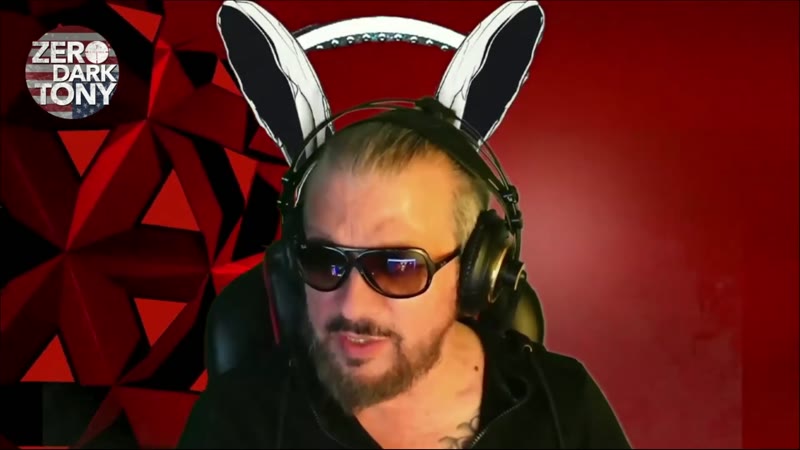
On an August 22, 2025 livestream, Anthony R. D’Amato, Jr., also known as ZeroDarkTony, opened his broadcast with a claim that set the tone for everything that followed. A rival streamer, “Krackhead Kenny,” referred to throughout as “Kracky,” had, he said, just lost his job. The reason, according to D’Amato: alleged misconduct involving doxing minors and impaired driving.
Then he added something else.
“Someone by the name of Kracky… has lost their employment due to doxing minors… DWI… and I’m to blame… Don’t make me do it again.”
The statement lands in two parts: first, an assertion of wrongdoing; second, a suggestion of involvement. The warning that follows, “Don’t make me do it again,” reframes the claim as something closer to a precedent.
Direct fundraising was observed via Rumble “rants,” with at least $70 received during the stream. The broadcast included both verbal escalation and calls for audience participation, often soliciting viewers’ agreement to inflammatory remarks or threats, while encouraging a group dynamic that mirrored the ZeroDarkTony’s antagonistic posture.
What unfolds over the next several hours is not a single allegation but a pattern. D’Amato returns repeatedly to the idea that his rival’s job loss was both justified and consequential, while expanding the conflict outward, to family members, workplaces, and the legal system. The stream moves from accusation to escalation, with each step reinforcing the last.
Exhibits
Exhibit A
D’Amato’s opening establishes the core narrative: a job loss tied to alleged misconduct, paired with an implication of personal responsibility.
“Someone by the name of Kracky… has lost their employment… and I’m to blame.”
He follows immediately with:
“Don’t make me do it again.”
The phrasing matters. The job loss is not presented as a distant event, but as something that can be repeated — a consequence that can be triggered again.
Timestamp: 00:09:59 – 00:11:43
Exhibit B
As the stream continues, the focus widens. The rival is no longer the only subject; his family becomes part of the narrative.
This is Kracky… the family… the child molesters in there somewhere… the convicted brother-in-law pedophile…”
No evidence is presented within the clip to support these claims. Instead, the effect is cumulative: the accusation grows larger, more diffuse, and more difficult to separate from those around him.
Timestamp: 00:12:49 – 00:14:35
Exhibit C
D’Amato returns to the central claim, restating the connection between alleged behavior and job loss, this time with sharper language.
“This unbelievable piece of human garbage… seems as if because of… doxing minors… this particular individual lost their employment…”
The repetition does two things. It reinforces the narrative, and it normalizes it — the claim becomes less an assertion and more a given within the logic of the stream.
Timestamp: 01:12:01 – 01:13:44
Exhibit D
At a certain point, the conflict leaves the level of commentary.
“I’m gonna serve it at your wife’s work… at the school…”
The statement introduces a new element: a third party, identified through their workplace. The mention of a school sharpens the stakes. What began as a claim about one person’s alleged actions now extends to someone else’s place of employment.
Timestamp: 01:48:15 – 01:51:16
Exhibit E
The next phase is procedural. D’Amato references legal filings, financial damages, and case numbers.
“I’m gonna add… about 25 to 50 G’s…and your wife’s gonna pay it off.”
Here, the language shifts from accusation to enforcement. The legal system is framed not just as a remedy, but as a mechanism for imposing consequences.
Timestamp: 02:08:32 – 02:11:42
Exhibit F
“I’m gonna subpoena your phone records… we’re gonna be able to see how many times that you’ve called… we’re gonna be able to make a window… and backtrack…”
Timestamp: 02:15:28 – 02:25:17
“You have no legal standing… you have no business doing anything with my case… you have no right or involvement… I’ve told you clearly to fuck off…”
n this segment, D’Amato outlines specific legal actions — including subpoenas and records review — while simultaneously arguing that his rival has no right to involve authorities or participate in legal processes.
He then frames his own actions as justified:
“I got a dangerous driver off the road… actually my responsibility as a citizen… I got a public safety hazard off the road…”
The framing is explicit: actions that may have contributed to the job loss referenced earlier are described not as retaliation, but as civic duty.
“You’re gonna be another one that I get… I have you now… you’re gonna drown in your own bullshit and I’m gonna be the one to put you there…”
The escalation continues:
“I’m gonna put Meena on the restraining order… I’m gonna put AZ Crimson on it… I’m gonna add everybody… they’ll all make a statement…”
D’Amato then expands the scope further, naming other individuals he says he will involve. He describes adding multiple people — including rivals and third parties — to legal filings and obtaining statements from them.
The escalation is no longer limited to one dispute. It becomes collective, drawing in additional participants as part of a broader effort to build a case.
Taken together, the segment presents a consistent posture. Legal tools — subpoenas, records, filings — are described as active and expanding, while opposing efforts to involve authorities are dismissed as illegitimate. The result is a one-sided narrative of control: the process is valid when he uses it, and improper when others do.
Sources
- Full SRT Transcript
- Full Text Transcript
- Date: 2025-08-22
- Stream ID: RUMBLE · v6xwqw0