

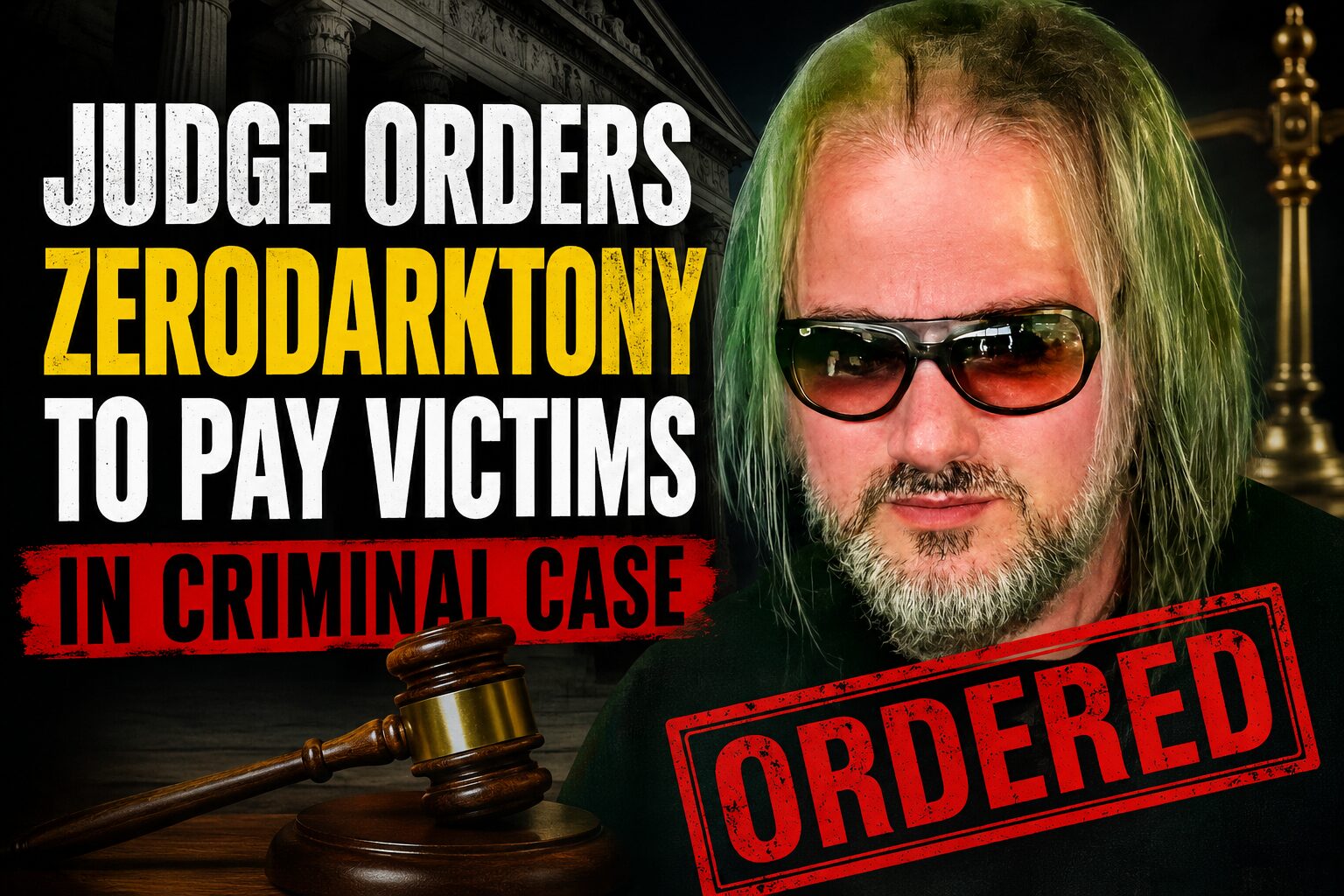
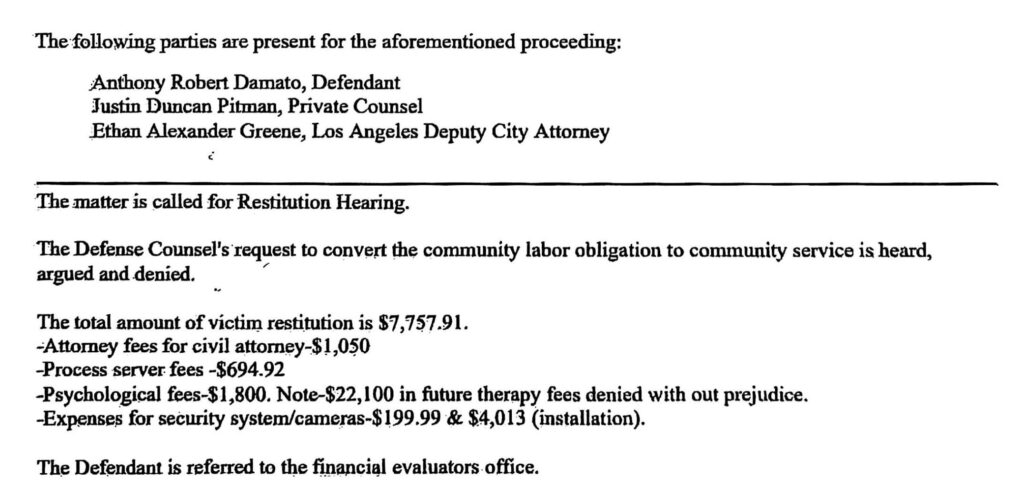
On June 26, 2026, Anthony R. D’Amato, Jr., also known as ZeroDarkTony, walked into Department 51 of the Clara Shortridge Foltz Criminal Justice Center for what should have been a straightforward accounting exercise: how much he owes the people he was ordered to stay away from. He left owing $7,757.91. He also left having lost an attempt to get out of the labor hours the court assigned him months earlier. Additionally, just two months prior, the City Attorney’s Office had laid out, exhibit by exhibit, a pattern of conduct it says continued after his plea, and in response, the judge issued an admonishment, ordering him to comply with probation terms and the protective order.
A Restitution Order and a Disclosure
Judge Jannet Perez Santiso opened the hearing with a disclosure: her spouse holds a managerial position in the Sex Crimes Division of the Los Angeles County District Attorney’s Office. The minute order states this does not affect her ability to be fair and impartial and does not by itself require recusal, and that disqualification would only be required if an attorney from that division appeared in the case. No such attorney has.

That framing had already been tested once before June 26. Enri Marini, another D’Amato victim who holds his own restraining order against D’Amato (Case No. 24STRO08473, upheld on appeal), filed a formal statement in May asking the court to disqualify Judge Perez Santiso over the same spousal connection and reassign the case to Judge Shannon Cooley, who had presided earlier in the proceedings. Judge Perez Santiso ruled on that request herself on May 18, 2026, finding Marini lacked standing to bring it and that, considered on the merits anyway, it did not establish grounds for disqualification. The June 26 disclosure restates the position the court had already taken a month earlier.
The restitution total that followed breaks down into five pieces: $1,050 in civil attorney fees, $694.92 in process server fees, $1,800 in psychological treatment costs, $199.99 for a security system, and $4,013 to install it. An additional $22,100 in anticipated future therapy costs was denied, but without prejudice, meaning it can still be sought later. D’Amato was referred to the court’s financial evaluators office to work out payment.
The Labor Request
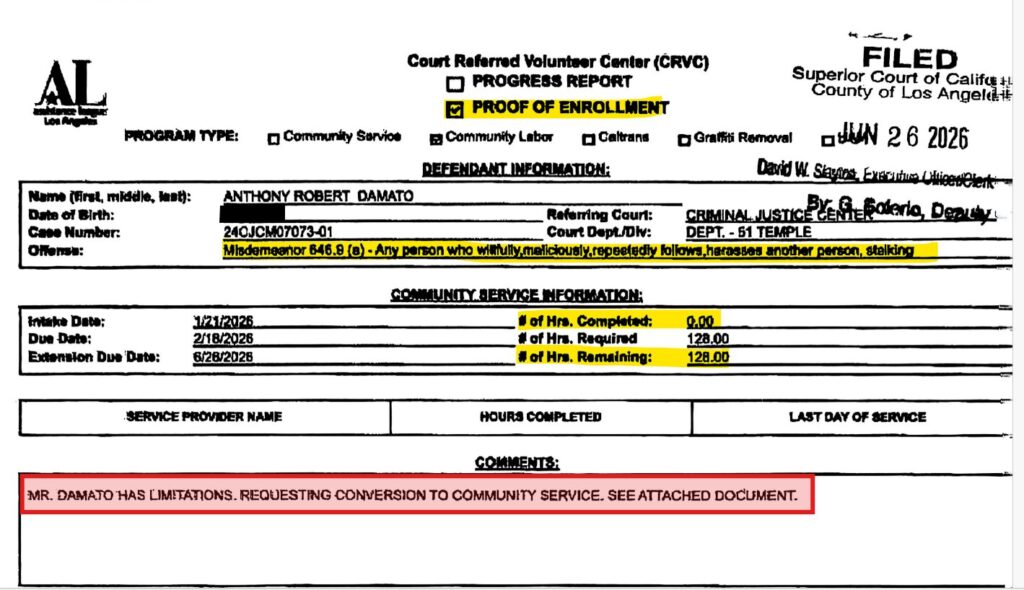
D’Amato’s attorney, Justin Duncan Pitman, also asked the court that day to convert D’Amato’s community labor obligation to community service. The request came backed by paperwork: a Court Referred Volunteer Center filing showing D’Amato had been assigned 128 hours of labor back in January, had completed zero of them by an extended June 26 deadline, and had attached a note reading, “MR. DAMATO HAS LIMITATIONS. REQUESTING CONVERSION TO COMMUNITY SERVICE. SEE ATTACHED DOCUMENT.”
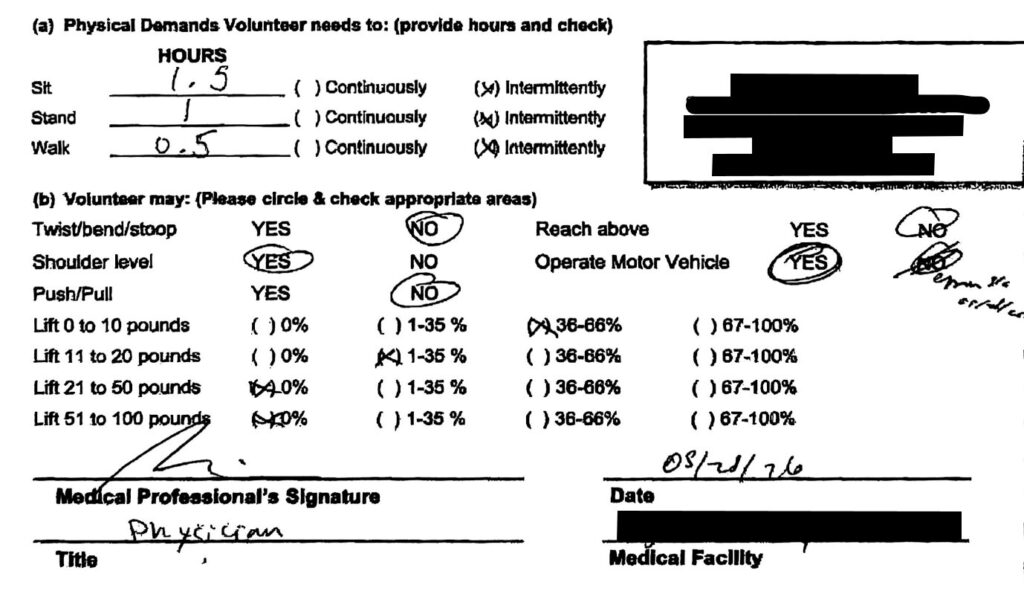
The attached medical form, signed by a physician on May 28, 2026, states D’Amato is being treated for cervical radiculopathy and takes ibuprofen and methocarbamol for it. It limits him to about ninety minutes of sitting, an hour of standing, and thirty minutes of walking, all intermittent, and caps what he can lift at twenty pounds. It clears him to drive.
The court heard the argument and denied it. D’Amato remains on the hook for the labor.

A second letter dated May 14, 2026, from a treatment center, states that D’Amato has been attending weekly mental health therapy sessions since March 23, 2026, and is “continuing to progress toward his treatment goals.”
What the City Attorney Already Had on File
The paperwork D’Amato’s side brought to June 26 was about his own limitations. Two months earlier, on April 24, 2026, City Attorney Hydee Feldstein Soto’s office had filed something very different: an update alleging that D’Amato kept violating his probation after he entered his plea, backed by a run of exhibits lettered PP through AAA. The filing was signed by Deputy City Attorney Ethan Greene.
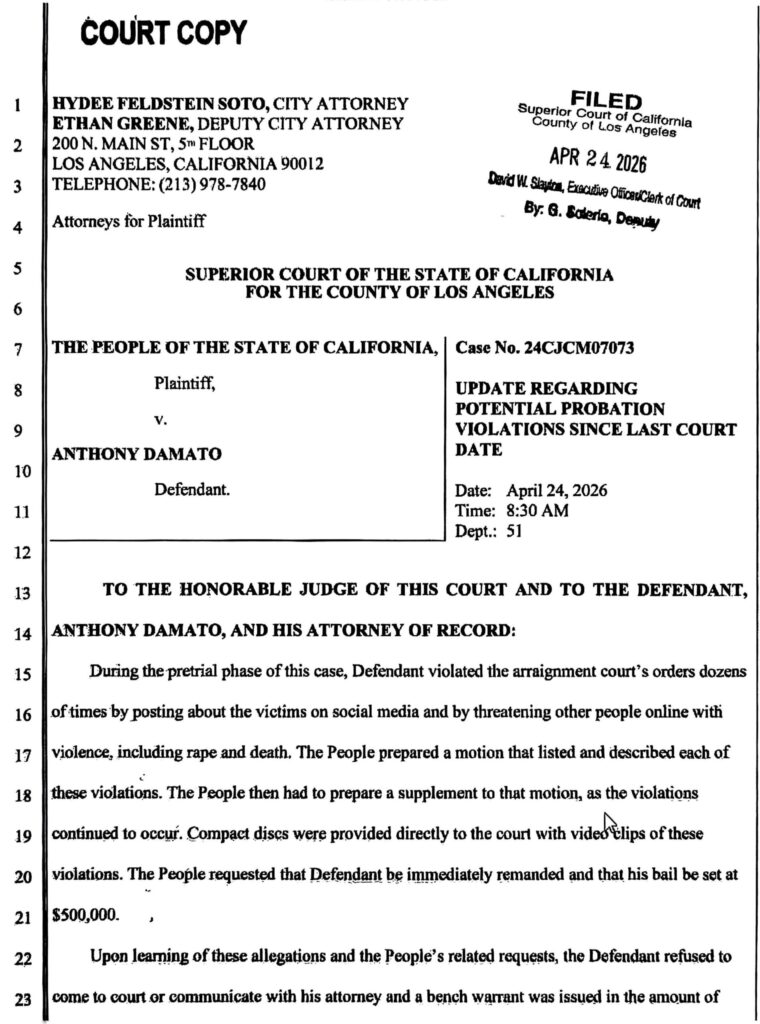
The filing traces the arc that got him there. During the pretrial phase, it states, D’Amato violated the arraignment court’s orders “dozens of times,” posting about the victims on social media and threatening other people online with rape and death. The People asked that he be remanded immediately on $500,000 bail. When he learned of that request, D’Amato did not show up to court or answer his attorney’s calls, and a bench warrant issued in the same amount. He entered his plea the same day it was resolved, and Judge Shannon Cooley, who then presided over the case, warned him directly that the conduct had to stop or he would face the maximum jail term the law allowed.
According to the People’s filing, it did not stop.
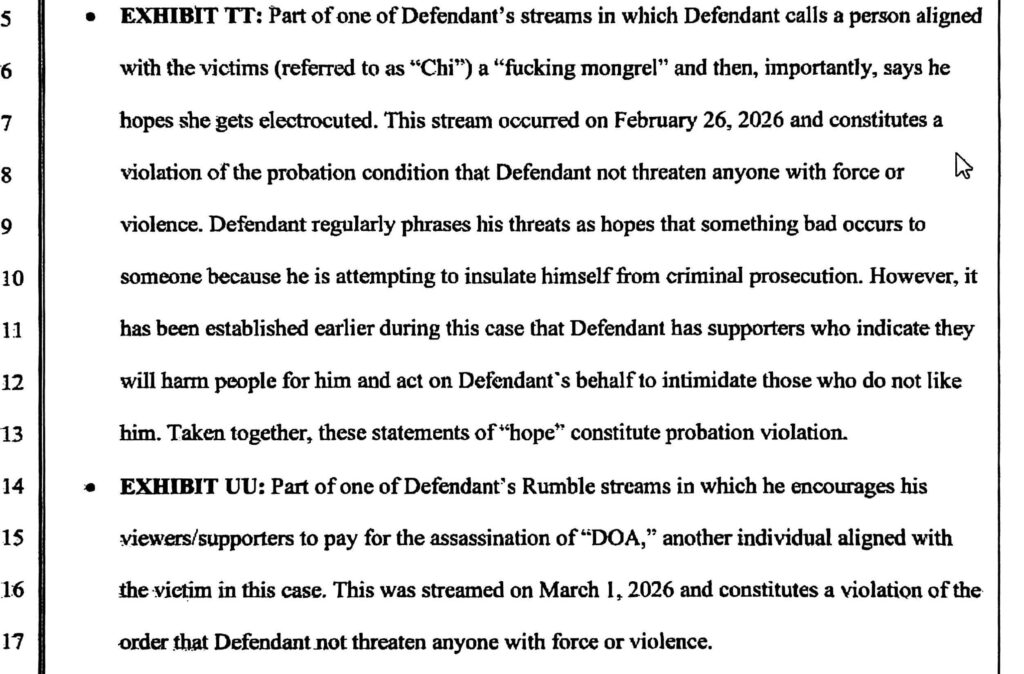
On February 11, 2026, D’Amato streamed a recording of someone else saying a victim’s name aloud, telling his audience he had “dozens of them like this” to use. On February 26, he called a person aligned with the victims a “fucking mongrel” and said he hoped she got electrocuted. On March 1, on Rumble, he encouraged his viewers to pay for the assassination of another person aligned with the victims. On March 4, he referred to victim Solomon Sassoon by the nickname “Slowboi,” a name the filing ties back to two earlier, pre-plea streams offered only as proof of what the nickname means. On March 6, a commenter posted Sassoon’s name repeatedly under one of D’Amato’s streams; the filing states D’Amato has the ability to moderate and block that kind of comment and let it stand anyway.
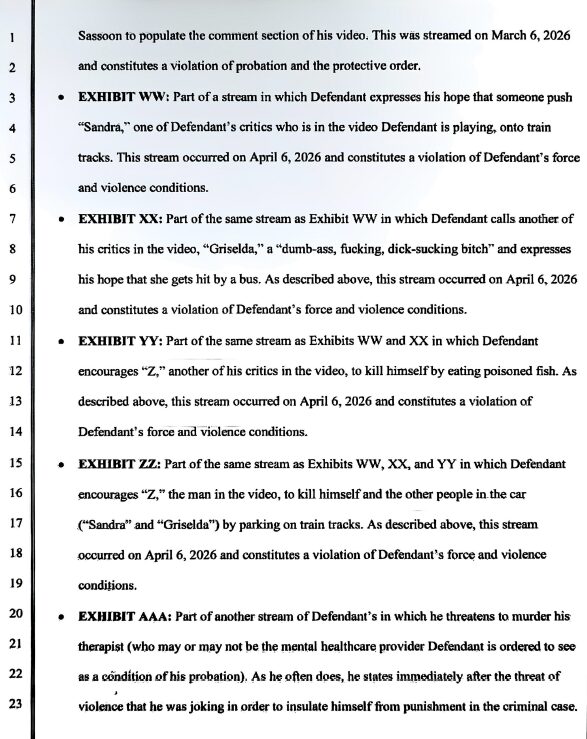
Then came April 6, one stream, three separate threats logged as three separate exhibits: D’Amato said he hoped a critic would be pushed onto train tracks, called a second critic a “dumb-ass, fucking, dick-sucking bitch” and said he hoped she got hit by a bus, and told a third person to kill himself, either by eating poisoned fish or by parking on the tracks with the other two still in the car. The next day, April 7, he threatened to murder his own therapist on stream, then said he was joking.
The filing is candid about how D’Amato phrases these statements: as hopes, not direct threats, a pattern it argues is designed to insulate him from prosecution. It notes he has supporters who have separately indicated they would act on his behalf. Taken individually, the filing states, some of the exhibits are more direct than others. Taken together, it argues, they add up. The People asked the court to decide whether the conduct amounts to a probation violation and, if so, to set a sentencing hearing.
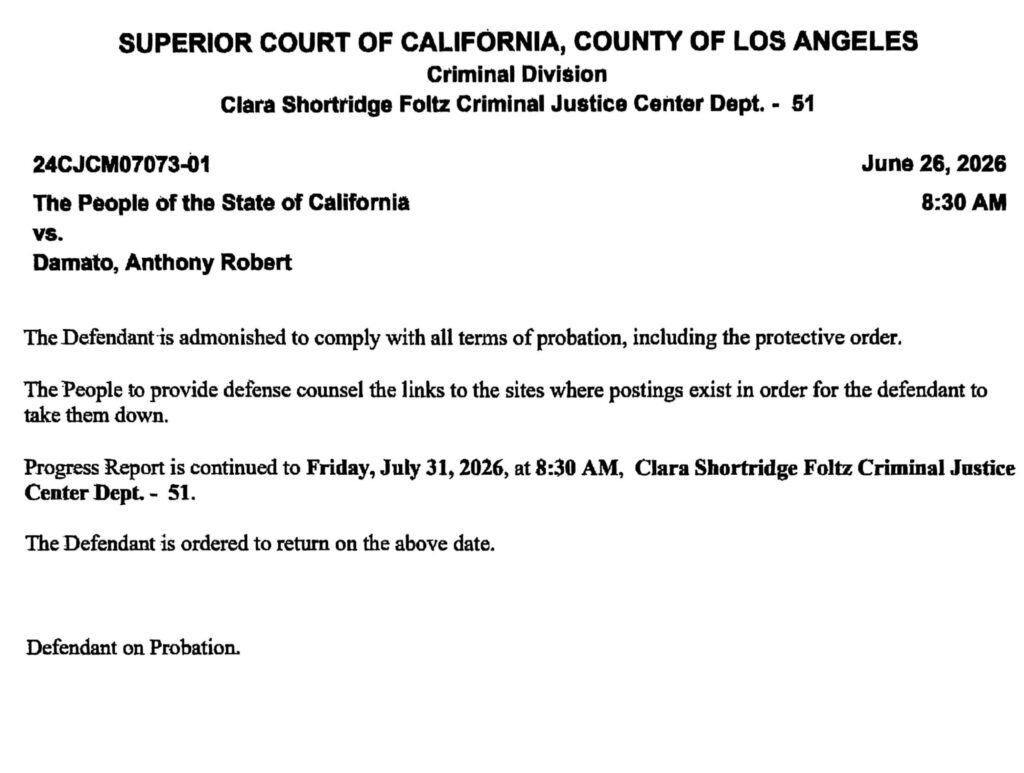
The Judge, according to the minute order, responded with an admonishment, and ordered to comply with the terms of his probation and abide by the protective order.
Who Has to Find the Videos?
The June 26 minute order also addresses the postings themselves. It directs the People, not D’Amato, to provide defense counsel with links to the specific videos it considers violations, so D’Amato can take them down.
The order puts that burden on the prosecution. D’Amato has been barred from referencing the victims since the original restraining order was granted in August 2024, almost two years before this hearing, and has been bound by an added criminal protective order since his no contest plea in December 2025. He is also the one who made the videos, hosts them on his own channels, and has known which victims are covered since 2024. Finding them does not require outside investigation on his part; it requires him to review his own back catalog.
In fact, D’Amato has discussed deleting old videos many times, even publicly working with one of his viewers to identify which videos to delete. He simply failed to delete them. Videos featuring Sasson are not the only videos he has to delete. A restraining order was obtained by Enri Marini, and a stipulated agreement with Mindy Willens both would require him to remove many more videos that are not deleted.
The exhibits in the April 24 filing show why the distinction matters. Most of the cited streams use a nickname for Sassoon, “Slowboi,” that appears in the video’s own title or on-screen text, meaning a keyword search would surface them. Exhibit SS does not: it documents D’Amato playing a clip of someone else saying a victim’s name aloud, mid-stream, while telling his audience he has “dozens of them like this” in reserve. That kind of clip would not appear in a title search at all. Surfacing it took the City Attorney’s Office reviewing stream content directly, not just metadata. The June 26 order does not say whether that same level of review will happen before every future hearing, or how many clips like it, buried in audio rather than titles, remain unflagged. D’Amato, by his own account on stream, knows the number is more than one.
What’s Still Open
Nothing in the June 26 record shows the court has yet ruled on whether the conduct in the April 24 filing constitutes a violation. The case returns to Department 51 on July 31, 2026, for a progress report. Until then, the restitution order stands, the labor hours stand, and the question the City Attorney’s Office put in front of the court in April, whether D’Amato violated his probation after his own plea and his own judge’s warning, remains unanswered on the docket.
D’Amato is due back to for his progress report with Judge Perez Santiso at the Clara Shortridge Foltz Criminal Justice Center on July 31st at 8:30 AM
The June 26, 2026 minute order in People v. D’Amato (24CJCM07073-01) is a public record of the Superior Court of California, County of Los Angeles. The Court Referred Volunteer Center filing and attached medical documentation were filed the same date. The People’s April 24, 2026 update regarding potential probation violations, including Exhibits PP through AAA, is a public court filing in the same case.