

Note on Sources: All information in this article is drawn from verified court records, docket entries, and associated filings that may no longer be available in public records. The case was resolved by plea, and the allegations described in the restraining order request were not tested at trial. A dismissal under Penal Code 1203.4 does not constitute a finding of factual innocence.
In a recent clip, Anthony R. D’Amato Jr., known online as “ZeroDarkTony,” responded to a reference to a domestic violence case with three words:
“Dismissed and Expunged.”
In a sense, the response tells you what you need to know. There is no denial of the case itself, only a focus on how it ended. And in that absence of denial, we have a de facto confirmation.
But focusing only on that final step narrows the story to its conclusion and leaves out what came before it: the incident itself, the charges, the conviction, and the victim, his former partner, whose account is preserved in the record.
To view the full breakdown of this ZDT broadcast, read “I’m Gonna Give You the EIN Number”: ZDT Escalates as DOA Alleges Scientology-Linked PI Business
This article is a follow up to a prior companion podcast episode here:
The Charges and the Conviction
The Los Angeles Superior Court docket reflects that the 2018 case (LAV8VW03402-01) included three charges.
• Inflicting corporal injury on an intimate partner (Penal Code 273.5(a)) — willfully causing a physical injury to a spouse, cohabitant, or dating partner that results in a “traumatic condition.” “Willfully” means the act was intentional, not accidental. “Corporal injury” refers to physical harm to the body. A “traumatic condition” includes visible injury such as bruises, cuts, swelling, or bleeding. This charge is more serious than battery because it requires physical injury, not just contact.
• False imprisonment (Penal Code 236) — unlawfully restraining, detaining, or confining another person against their will.
• Battery (Penal Code 242) — any willful and unlawful use of force or violence upon another person. It does not require physical injury; actions such as grabbing, slapping, or pushing can qualify.
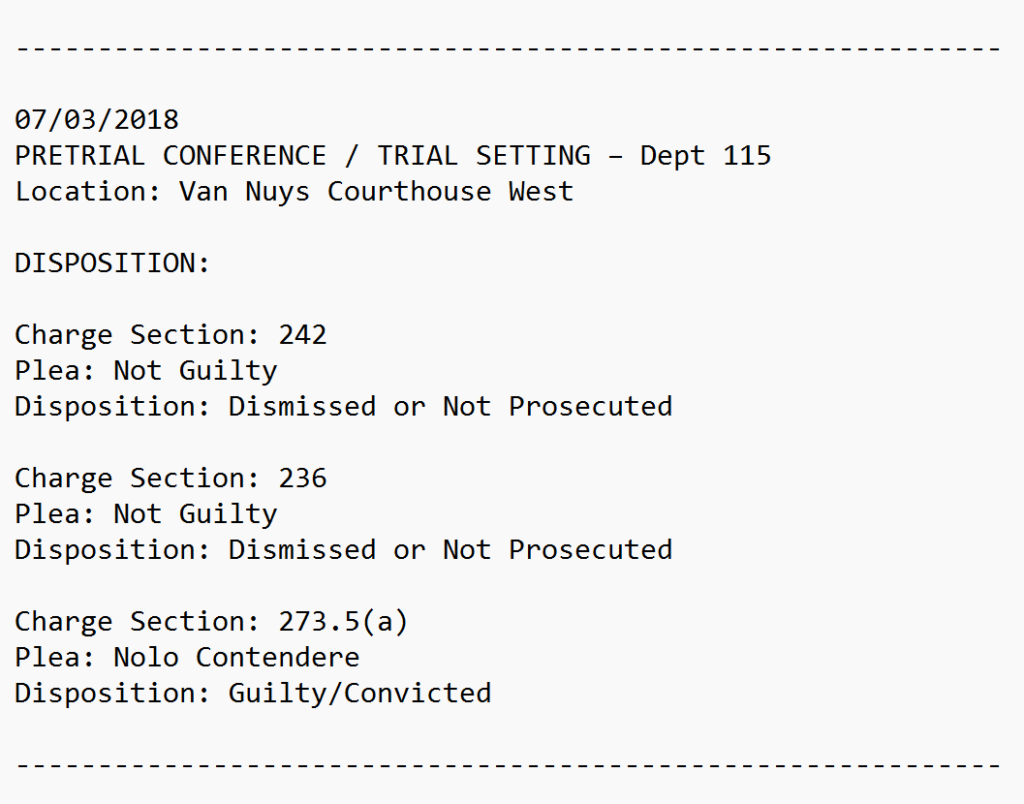
On July 3, 2018, the case was resolved by plea.
The record shows that D’Amato entered a no contest plea to the charge of inflicting corporal injury on an intimate partner. The court entered a guilty disposition on that count.
The structure of the outcome reflects a common pattern in plea agreements. Prosecutors secured a conviction on the most serious charge, which was inflicting injury on an intimate partner, while the remaining charges of false imprisonment and battery were not pursued. Plea agreements often narrow a case to the charge most strongly supported by the evidence while avoiding the cost and uncertainty of trial.
The remaining charges — false imprisonment and battery — were dismissed or not prosecuted.
The court imposed a sentence of 36 months summary probation and 120 days in Los Angeles County Jail.
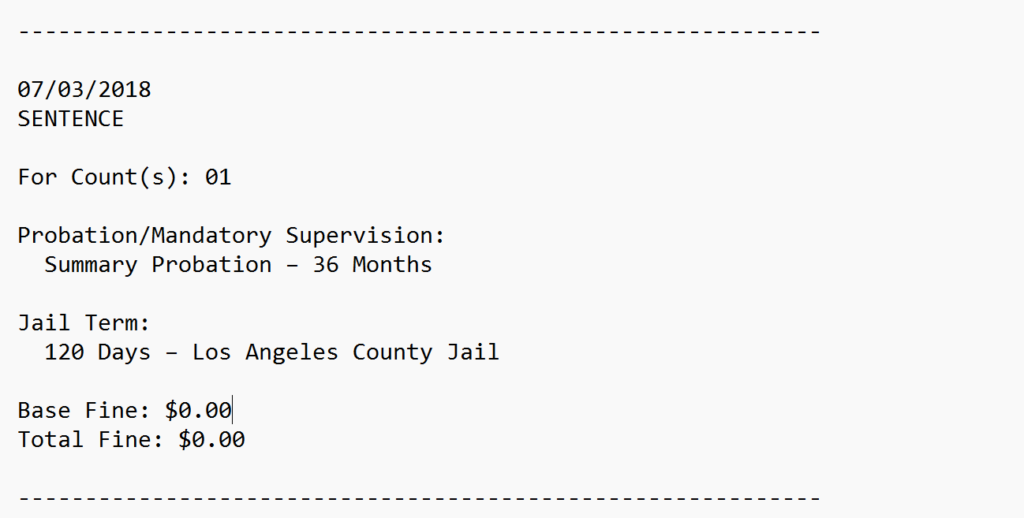
Subsequent docket entries reflect compliance with court-ordered conditions, including domestic violence classes.
The Crime and the Resulting Emergency Protective Order
Separate from the criminal case, the police issued an emergency protective order at the scene, which requires contact with a judge to issue immediately. The victim, later that same week, made a restraining order request and submitted a sworn declaration to secure a temporary restraining order.
In that filing, the petitioner described returning home in the early morning hours of March 30, 2018 with a friend when D’Amato arrived and began accusing her of cheating. The declaration alleges that a confrontation followed, during which her phone was broken when she attempted to call 911, and that she was coerced inside a residence under the pretenses of collecting his belongings, where physical violence then occurred.
Separate from the criminal case, the police issued an emergency protective order at the scene, which requires contact with a judge to issue immediately. The victim, later that same week, made a restraining order request and submitted a sworn declaration to secure a temporary restraining order.
In that filing, the petitioner described returning home in the early morning hours of March 30, 2018 with a friend, when D’Amato arrived and began accusing her of cheating.
The declaration alleges that a confrontation followed. During that confrontation, her phone was broken when she attempted to call 911. She was then coerced inside a residence under the pretense of collecting his belongings, where the violence escalated.
As D’Amato got her inside, he allegedly threw a motorcycle helmet at her friend, though the friend was able to dodge it. He then pushed the friend to the ground, causing his head to hit the side of a wall.
When the friend tried to follow the victim to ensure she was not left alone, D’Amato pushed him down again, jumped on top of him, and punched him several times. The victim ultimately begged him to leave for his safety.
What followed was a prolonged and violent ordeal.
She alleges that D’Amato repeatedly placed his hands on her throat and neck. At one point, he put his full weight on her neck, making it impossible for her to breathe.
She also describes him slapping her across the face multiple times. These blows were so severe that her nose began bleeding profusely, and she reported losing consciousness twice during the encounter — once for a few seconds on the bed, and once for nearly a minute after falling to the floor.
She says he grabbed her by the hair, spat on her face, and forcibly dragged her through her apartment.
The filing also describes threats directed at her family, her career, and her pet. In one portion, the petitioner wrote that D’Amato threatened to “cut up my cat into pieces.”
The victim also described acts intended to humiliate and degrade her. After she refused to take her clothes off, D’Amato ripped her shirt off and began taking her pants off against her will, while she pleaded with him to stop. He allegedly took out a packet of cocaine and placed a line on her backside while she was on the bed.
She also recounts that he poured beer all over her and called her names such as “dirty whore,” “stupid fucking cunt,” “bitch,” and “piece of shit.”
Beyond the physical and sexual violence, the victim describes psychological terror. D’Amato claimed he was “well-connected” and threatened to have “goons” find her family, place burns all over her body, and beat her to death. He threatened to ruin her career by sending a private, consensual video they had made to her executive producer, stating she would “never find a job” in her field again.
From the victim’s point of view, D’Amato used his physical presence and assertions of power to terrify her, at one point declaring, “I am King Kong and no one could fuck with me. You do not know who you fucked with.”
He further isolated her by mocking her inability to call for help after he broke her phone, laughing and asking, “With what phone? You can’t use yours anymore.”
During the assault, D’Amato oscillated between violence and declarations of affection in what appeared to be an attempt to confuse and control her, repeatedly stating how much he loved her while continuing the attack.
He also invoked his own child as a form of pressure, telling the victim she could not send him to prison because he “had a daughter.”
After the physical violence, D’Amato moved to the kitchen and threatened to end his own life by slitting his wrists — a situation the victim had to navigate by attempting to calm him and gain his trust.
She describes that she pretended to panic about her cat. This prompted D’Amato to go into the bedroom to look for the animal. While he was preoccupied, the victim opened the front door and ran out. She notes she was “half naked” at the time of her escape.
She ran to the apartment of her friend, who let her in. From there, they called the police.
Even after she escaped, she could hear the motorcycle cycling around the street, going back and forth outside the friend’s apartment where she sought refuge.
In addition to the direct threats against her family, the declaration references prior incidents, including one in which a relative was reported to be afraid for her life after D’Amato allegedly showed up intoxicated and banged on the door.
She then incurred a prolonged and violent ordeal at the hands of Anthony D’Amato, involving physical assault, sexual degradation, and extreme psychological terror.
She alleges that D’Amato repeatedly placed his hands on her throat and neck. At one point, he put his full weight on her neck, making it impossible for her to breathe.
She also describes him slapping her across the face multiple times. These blows were so severe that she says her nose began bleeding profusely, and she reported losing consciousness twice during the encounter — once for a few seconds on the bed and once for nearly a minute after falling to the floor.
She says he grabbed her by the hair, spat on her face, and forcibly dragged her through her apartment.
The filing also describes alleged threats directed at her family, her career, and her pet. In one portion, the petitioner wrote that D’Amato threatened to “cut up my cat into pieces.”
Not only did he physically hurt her, the victim described several acts intended to humiliate and degrade her. After she refused to take her clothes off, D’Amato ripped her shirt off and began taking her pants off against her will, while she pleaded with him to stop. D’Amato allegedly took out a packet of cocaine and placed a line on her backside while she was on the bed.
She also recounts that he poured beer all over her and called her names such as “dirty whore,” “stupid fucking cunt,” “bitch,” and “piece of shit.”
Beyond the physical and sexual violence, the victim alleges psychological terror. D’Amato claimed he was “well-connected” and threatened to have “goons” find her family, place burns all over her body, and beat her to death. He threatened to ruin her career by sending a private, consensual video they had made to her executive producer, stating she would “never find a job” in her field again.
From the victim’s point of view, D’Amato used his physical presence and assertions of power to terrify her, at one point declaring, “I am King Kong and no one could fuck with me. You do not know who you fucked with.”
He further isolated her by mocking her inability to call for help after he broke her phone, laughing and asking, “With what phone? You can’t use yours anymore.”
During the assault, D’Amato oscillated between violence and declarations of affection in what appeared to be an attempt to confuse and control her, repeatedly stating “how much he loved [her]” while continuing the attack.
He also invoked his own child as a form of pressure, telling the victim she could not send him to prison because he “had a daughter.”
After the physical violence, D’Amato moved to the kitchen and threatened to end his own life by slitting his wrists — a situation the victim had to navigate by attempting to calm him and gain his trust.
She describes that she pretended to panic about her cat. This prompted D’Amato to go into the bedroom to look for the animal. While he was preoccupied, the victim opened the front door and ran out. She notes she was “half naked” at the time of her escape.
She ran to the apartment of her friend, who let her in. From there, they called the police.
Even after she escaped, she could hear the motorcycle “cycling around the street, going back and forth” outside the friend’s apartment where she sought refuge.
In addition to the direct threats against her family, the declaration references prior incidents, including one in which a relative was reported to be “afraid for her life” after D’Amato allegedly showed up intoxicated and banged on the door.
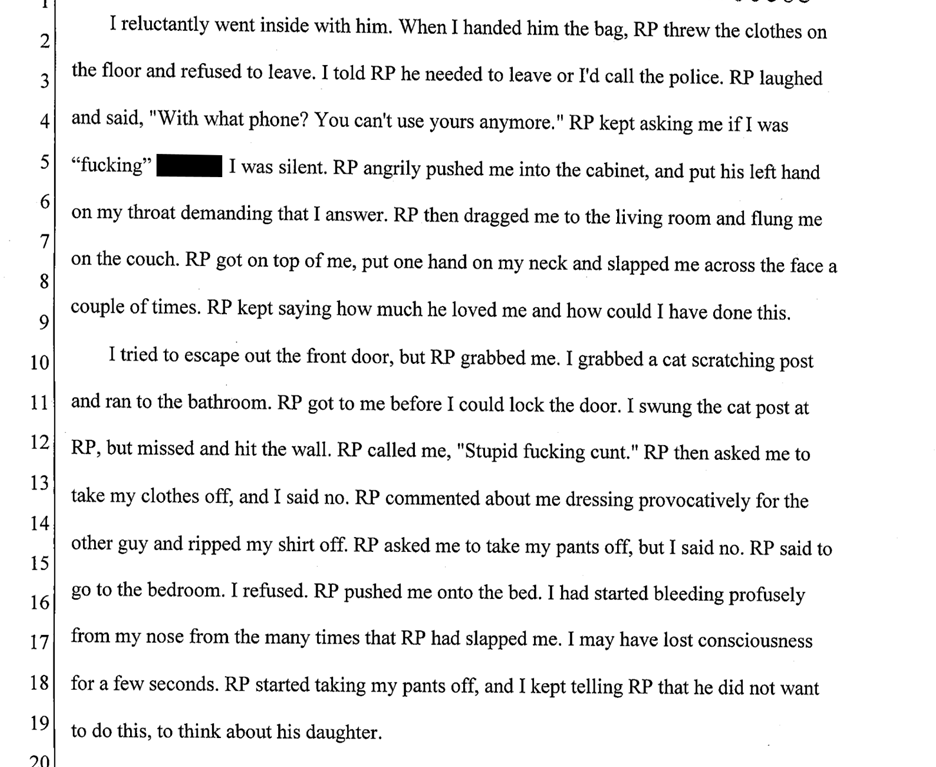
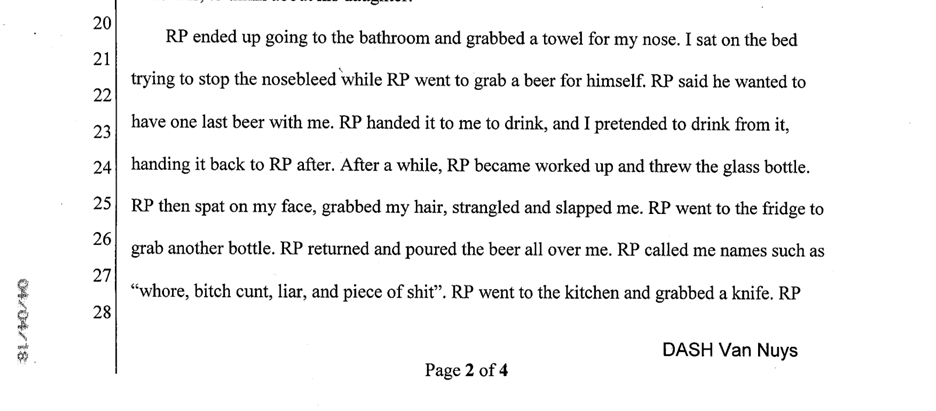
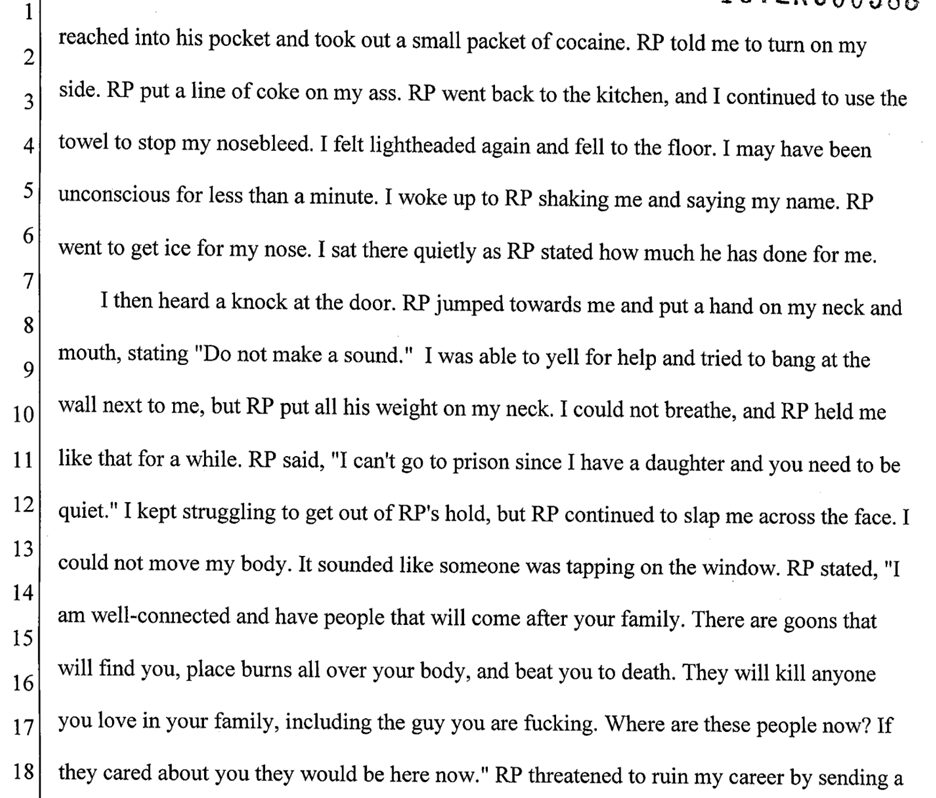
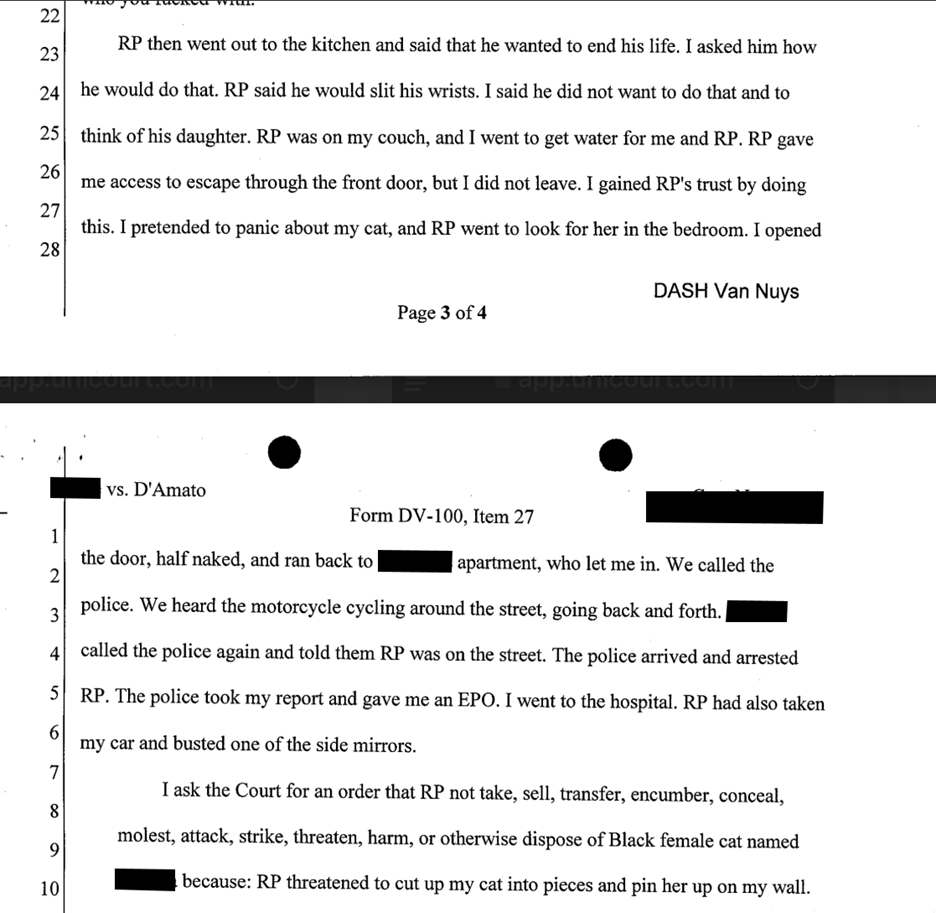
Exhibit C — Redacted portions of sworn declaration filed in support of restraining order request (2018).
These statements were made under penalty of perjury and are part of the court record. The criminal case, however, was resolved by plea, meaning the allegations in the declaration were not tested through a full trial.
They remain allegations in a sworn filing, separate from the conviction reflected in the criminal docket.
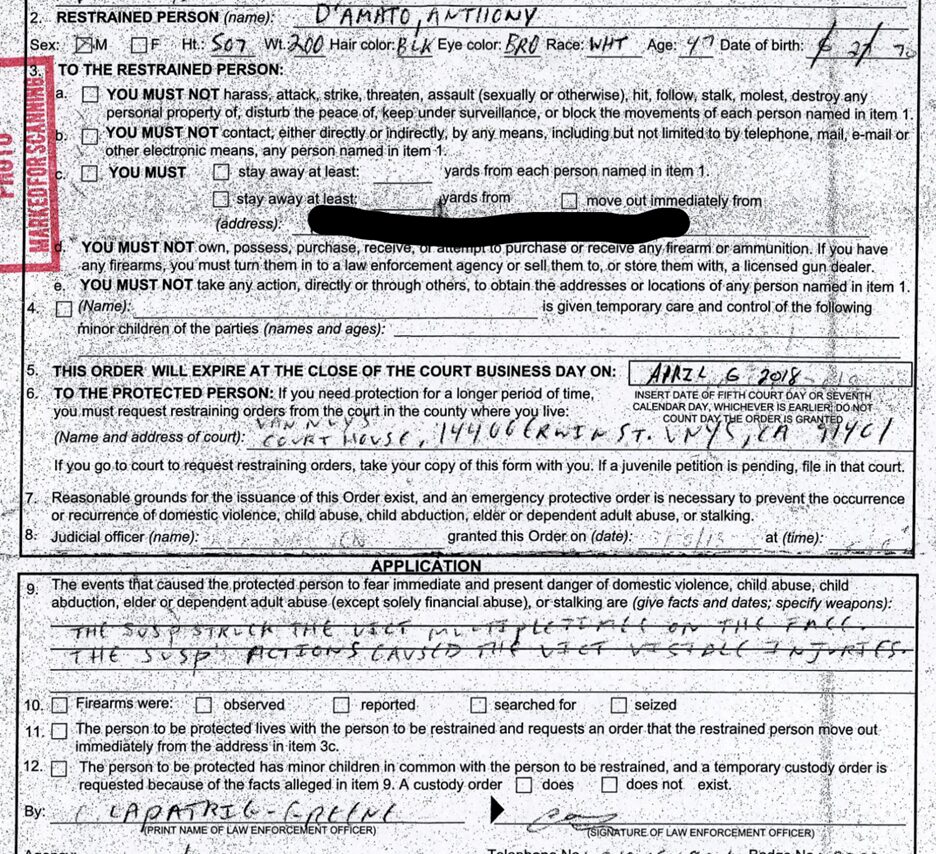
Exhibit D – Emergency Protective Order, issued at the scene.
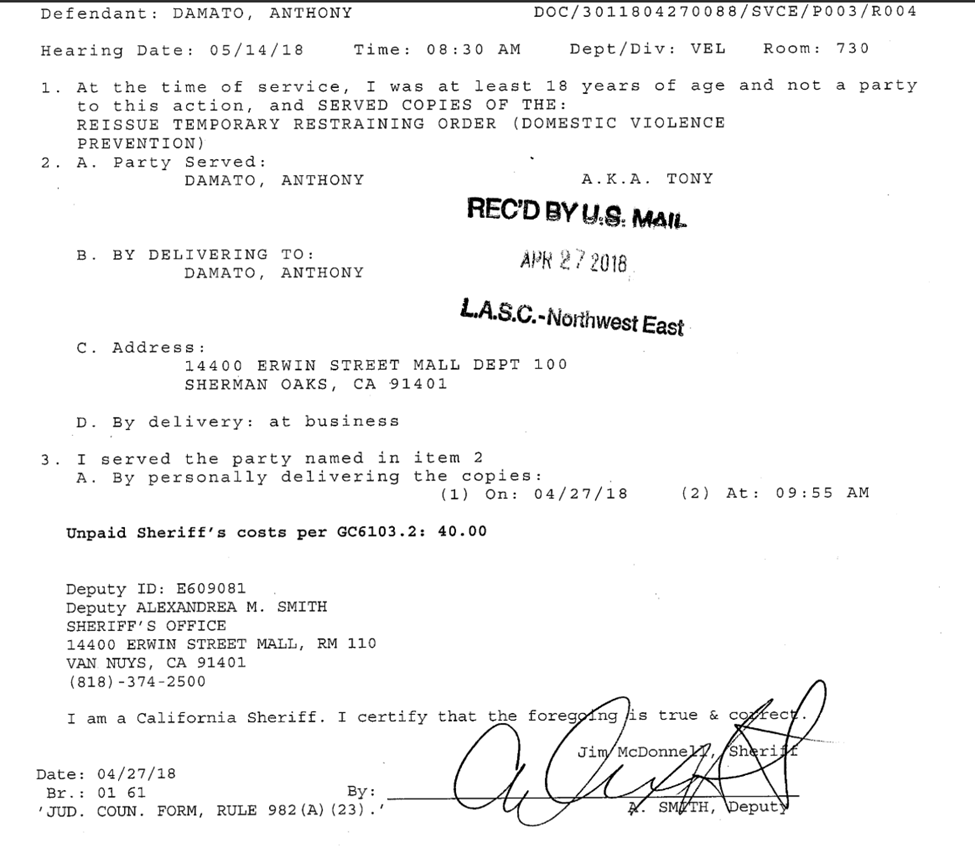
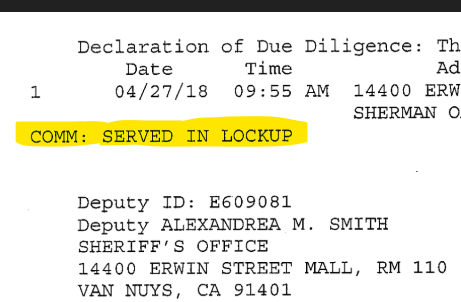
Exhibit E – Proof of Service – Served in Lockup
The civil harassment restraining order was not pursued further, most likely because the criminal case moved forward, D’Amato was in jail, and a criminal protective order was likely in place.
What “Dismissed and Expunged.” Means in This Case
Years after the conviction, the “No match found” and “No longer available” status of the court record verify that the final conviction has been removed from public view, consistent with a case being “dismissed.” That dismissal is real. It is part of the record.
But it does not stand alone.
Under California law, a dismissal under Penal Code 1203.4 allows a defendant to withdraw a plea and have the case formally dismissed after completing probation. It changes how the case is classified and how it appears in many public and commercial databases.
It does not erase the earlier conviction from the case history, and it does not represent a finding that the original allegations were false.
It is a later step in the same sequence.
The Record and the Public Search Gap
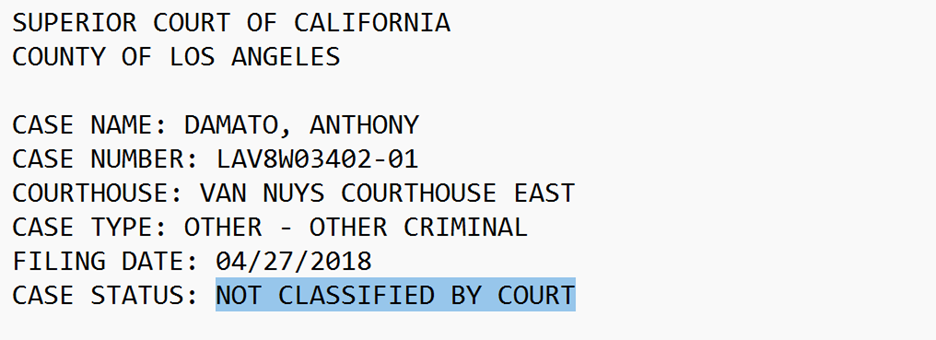
Today, a search for LAV8VW03402-01 in standard public-facing court tools may return something like the following:
“Not classified by court”
“No match found.”
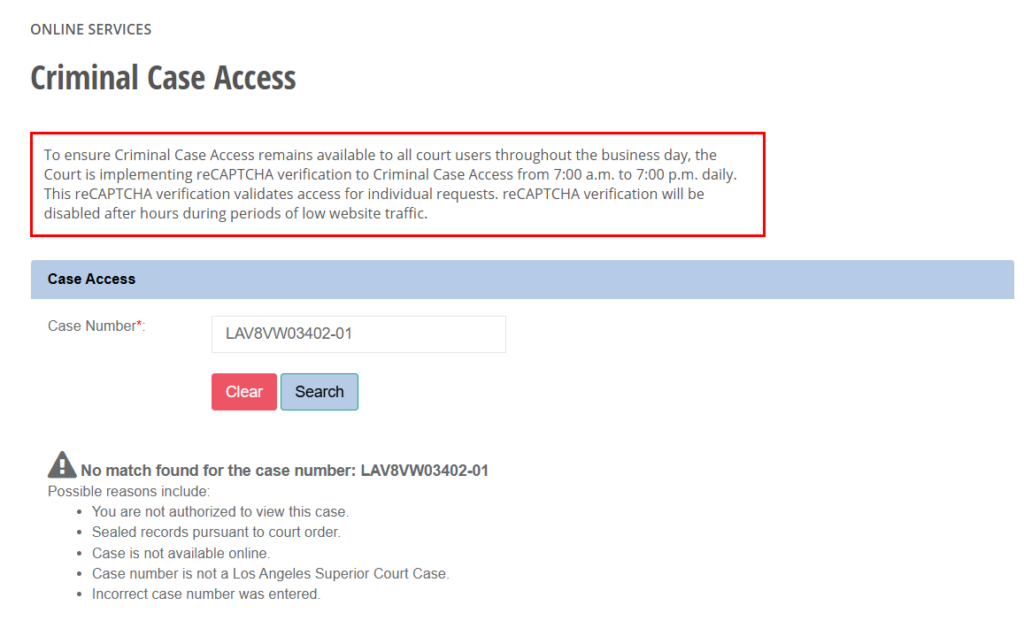
Exhibit F – Case not found publicly
Other system views indicate that the case is no longer available in typical public search and is listed as “Not Classified By Court.”
This limited visibility helps explain why a consumer background check may appear “clean,” and why statements about a lack of record may rely on those tools.
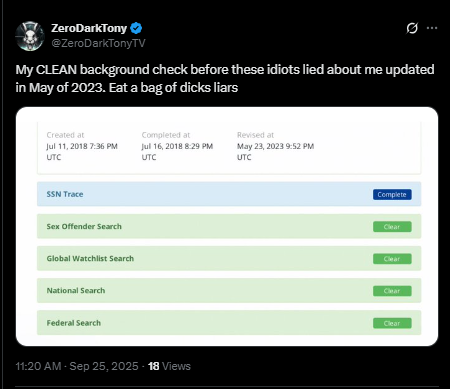
Exhibit G – Public Facing Record Appears “Clean”
But the absence of a result in a public-facing database is not the same as the absence of a case.
The underlying record — including the charge, plea, conviction, and dismissal — remains part of the court system.
A Response That Focuses on the Ending
D’Amato’s response, “Dismissed and expunged.” describes the final procedural status of the case.
What it does not reflect is the sequence that came before it — the charges, the conviction, and the events described in the record.
Today, the case is difficult to locate through standard public searches. A consumer background check will likely return nothing at all.
In practice, that means D’Amato benefits from a legal process that allows the case to be effectively erased from public view once probation is completed and a dismissal is entered.
To someone encountering him now, there may be no meaningful way to understand that history through standard channels. The record may be hidden in public systems, but the documentation is preserved here.