
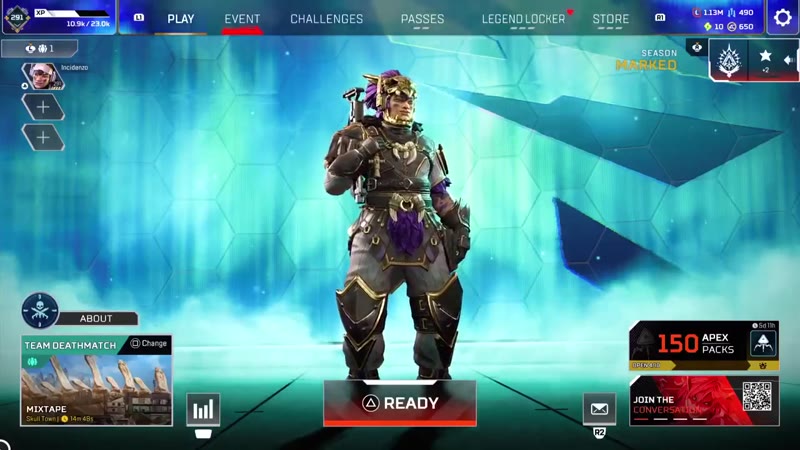
ZDT NIGHTSHIFT MAMBO ITALIANO, LEGION OF DUMB, FATMAXXING [ZeroDarkTony] / September 30, 2026 / YouTube / 8E-2h46mbOM
Streamer solicited CashApp contributions toward legal bills the same night he described the anticipated fee award.
The night before a Los Angeles judge was set to decide whether Jarred Brooks owes him $23,197.40 in attorney’s fees, Anthony D’Amato Jr. told his livestream audience the hearing might take five minutes.
By his account, his attorney would walk in with “some receipts.” The motion she filed in August came without them.
The hearing, which D’Amato said was set for 8:30 a.m., was calendared Thursday in Department 65 before Judge Holly L. Hancock-Goode, who issued a five-year restraining order against Brooks in June.
“A Pretty Good Shot at Getting the Fees”
D’Amato spent part of the stream revisiting the June 22 hearing. He said he and his attorney played selected clips, with time codes pointing into longer recordings, and that he watched the judge react to them.
Exhibit A
D’Amato tells his audience that clips submitted to court were selected from multi-hour recordings to give the judge targeted timestamps, saying, “We just would do the, you know, number codes, the time codes within, so it’s not like people had to watch like six, eight hours of it.” He expresses confidence the fee hearing will resolve in his favor: “I think we have a pretty good shot at getting the fees. And the whole thing of it is that this is what happens when people don’t listen. You get in trouble.”
Timestamps: 01:38:35 – 01:41:55 | Watch with a free account
This clip documents D’Amato’s on-stream account of the evidence-submission process, including his description of the judge’s reaction to the selected recordings. He identifies the upcoming proceeding as a fee hearing tied to a restraining-order matter and states he expects a decision by lunch the following day. The clip records D’Amato’s account that selected video clips, with time codes referencing longer source recordings, were played at the June hearing.
Winning the restraining order and winning fees are separate questions. California’s civil harassment statute says a prevailing party “may” be awarded attorney’s fees, “if any,” and the Court of Appeal has held that whether to award anything at all is left to the trial judge.
The clips D’Amato describes went to whether harassment happened, and the judge decided that in June. None of them speaks to how many hours his attorney worked or what D’Amato owes her. On fees, what the judge has is the motion, the attorney’s declaration and Brooks’s opposition.
“The Attorney Shows Some Receipts”
Later in the stream, D’Amato talked through the morning ahead.
Exhibit B
D’Amato discusses the logistics of the morning hearing, with D’Amato noting the presence of courtroom security and characterizing the expected proceeding as brief. He says, “I think it’s just a matter of the attorney shows some receipts and the judge looks at them and goes, OK to this or no to that or OK to that and no to this.” Shortly before that, he says, “We are two guys that don’t want to catch a case, okay? Let’s just put it that way.”
Timestamps: 01:46:57 – 01:52:00 | Watch with a free account
This clip captures D’Amato’s description of the fee hearing as a straightforward attorney presentation before the judge, with no anticipation of significant dispute. He does not say who the “two guys” are. Together, the two clips record D’Amato’s account of the evidence played at the June hearing and, on the eve of the fee hearing, his expectation that his attorney would present receipts. The fee motion on file attaches none.
The motion his attorney, Dawn Dunbar, filed in August attaches no invoice, no fee agreement and no billing records. Her four-page declaration lists time in approximate half-hour blocks, was signed seven weeks after the final hearing, and calls its own total of about 35.5 hours “the minimum hourly estimate.” Brooks, who lives in Slidell, Louisiana, represents himself and had his court fees waived in April, raised each of those gaps in his written opposition and objected in advance to any billing evidence offered for the first time in reply.
If Dunbar arrives with billing records, that objection puts a choice to the judge. New evidence generally is not allowed in reply papers, though a judge can consider it if the other side gets a fair chance to respond. Either way, the burden to prove the fees was D’Amato’s to meet in the motion itself.
“In the 23,000 Range”
“I know there’s a certain figure that’s out there and it’s in the 23,000 range, and that just is what it is,” D’Amato said.
That is not the number he gave his viewers in June. On June 23, the day after the hearing, he told his stream the bill would land somewhere between $10,000 and $12,000. Brooks attached a transcript of that stream to his opposition.
Seven weeks later, Dunbar’s sworn total was $23,075, nearly double. D’Amato did not address the difference on this stream, but seemed like he didn’t know much about it. Wouldn’t you know what that figure was if you had been invoiced?
“The Lawyers Have to Put in More Hours”
D’Amato’s explanation for the size of the bill is that Brooks had every right to fight the petition but “just did it wrong.”
“And when you do it wrong, it’s a big waste of time because then the lawyers have to put in more hours to respond, to look at all the videos, to look at all the evidence,” he said. Attorneys research case law, he added, rather than write documents “off the dome.”
That tracks Dunbar’s declaration, which blames most of the hours on what it calls Brooks’s “frivolous motions.” Brooks’s opposition answers that directly, and the record backs him up. Neither of his two motions was ruled frivolous, D’Amato never sought sanctions for either, and the docket shows no written opposition from D’Amato’s side to either one.
In D’Amato’s first case against Brooks, a commissioner granted a nearly identical motion and dismissed the petition. A motion that has already won once is hard to call frivolous.
The declaration’s own numbers also point away from research and writing. Four court appearances, each logged as time “including drive time,” account for 19.5 of the 35.5 hours, more than half the bill. As Brooks’s opposition notes, the declaration never says how much of that was spent in the courtroom and how much on the freeway.
“We Definitely Got Some Legal Bills”
Near the end of the stream, D’Amato thanked viewers who had sent money through CashApp. “We definitely got some legal bills, so I appreciate everybody for chipping in,” he said. He did not say which case the bills were from, how large they were or how much viewers had given.
Who is paying Dunbar is a question the fee motion never answers. The declaration’s only word on it is four words: “Petitioner hired my office.”
California law does not require a party to pay legal bills out of pocket to recover them, and fees someone else covers can still be awarded. But Brooks argues that the statute’s words “if any” limit an award to fees D’Amato actually incurred, and nothing in the motion shows what D’Amato agreed to pay or has paid.
That gap matters because the going rate for this kind of case is no secret. Flat fees advertised by Los Angeles restraining order attorneys that Hero Not Zero reviewed mostly cluster around $4000 to $6000. Whether Dunbar’s arrangement looked anything like that, the motion does not say, nor does it provide a copy of any payment agreement.
D’Amato has been here before. In 2024, a different Los Angeles judge read “if any” the same way Brooks does and denied D’Amato’s fee request in full, after his attorney at the time refused, citing privilege, to say whether D’Amato had been billed.
“I’ll Know by Lunch”
D’Amato’s side has points in its favor. California lets a lawyer’s sworn declaration stand in for formal time records, and Hancock-Goode presided over every hearing the bill covers.
But the party asking for fees still has to prove the hours and the rate are reasonable. Nothing the judge saw from the bench tells her how long Dunbar spent driving, and the declaration supports her $650 hourly rate with a single sentence about her 26 years in practice.
D’Amato told viewers he would know the outcome “by lunch.” Whether the judge sees any receipts depends on what Dunbar brings to court, and on whether Hancock-Goode will consider evidence that was never in the motion.
Sources
- Original YouTube Video
- Full SRT Transcript: for HNZ Supporters
- Full Text Transcript: for HNZ Supporters
- Full Chat Transcript: for HNZ Supporters
- Date: 2026-09-30
- Stream ID: YOUTUBE · 8E-2h46mbOM
React to this story