
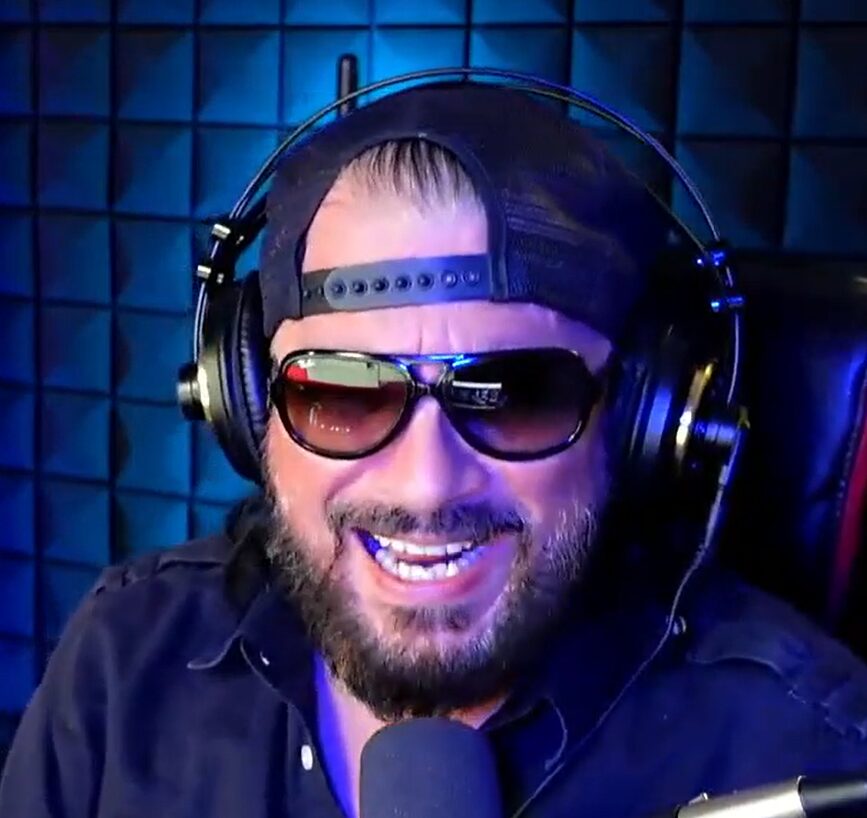
LOS ANGELES — A Los Angeles livestreamer known online as “Zero Dark Tony” is now the subject of a $500,000 bench warrant after failing to appear at a critical pretrial hearing in a criminal case accusing him of stalking, harassing, and threatening a teenage content creator and the teen’s mother.
The case, which began as an online feud between the defendant and other anti-Scientology YouTubers, has widened into a complex legal confrontation involving dozens of alleged social-media threats, strict court-ordered speech restrictions, and a hospitalization that has raised questions—but not yet answers—about the defendant’s condition and whereabouts.
Video evidence and court filings reviewed by this publication—including the most recent documents obtained by journalist Eric Levai—show a months-long pattern of escalating behavior that prosecutors say endangered the victims and repeatedly defied judicial warnings. One week after the missed hearing, a separate civil attorney submitted a letter stating that the defendant was still hospitalized, adding a new layer of uncertainty to an already volatile case.
An Online Feud Spills Into the Courts
The defendant, whose legal name is Anthony R. D’Amato Jr., built a small but loyal following by livestreaming video games and offering commentary on internet personalities. Among those he repeatedly discussed was a then-minor teenager known online for speaking out against the Church of Scientology.
According to prosecutors, D’Amato’s commentary eventually escalated far beyond criticism. In filings submitted by the Los Angeles City Attorney’s Office, prosecutors allege D’Amato mocked the teen using slurs and coded nicknames—such as “Pop Tart,” and “the juvenile delinquent”—while livestreaming to viewers. They further allege he analyzed the teenager’s videos to identify his location, referenced the mother’s workplace, and encouraged viewers to call child protective services on the family.
In 2024, the teen and the teen’s mother obtained a civil harassment restraining order against D’Amato. But prosecutors say the harassment continued.
During D’Amato’s February 2025 arraignment on 26 criminal counts—including stalking, child abuse through emotional distress, and multiple violations of the restraining order—a judge issued a firm warning: if D’Amato referenced the victims again on social media, he would be remanded into custody and a $500,000 warrant would issue.
A Pattern of Violations, Prosecutors Say
Despite that warning, prosecutors argue D’Amato continued referencing the victims using nicknames, euphemisms, and “hypothetical scenarios” that closely mirrored real-world events.
A motion filed October 2, 2025, included more than 30 alleged violations sourced from livestreams recorded by online archivists. These clips reportedly include mocking references to the protected parties, commentary on ongoing proceedings, and violent threats against critics and other content creators.
A supplemental motion filed October 27 went further, citing more recent examples—including statements describing people being tied to trucks and dragged, references to sexual assault, a mention of “breaking out the .50-caliber sniper rifle,” racially charged fantasies involving plantations and whippings, and an AI-generated image depicting himself mutilating an accuser.
Prosecutors noted that some of these posts were made after the court scheduled the October 29 hearing specifically to address earlier violations.
Prosecutors argue D’Amato’s conduct demonstrates a “flagrant and public disregard” for the protective order and poses an increasing threat to the victims and others.
The Missed Hearing and the Bench Warrant
On the morning of October 29, 2025, prosecutors, the judge, and defense attorney Scott Spindel appeared in Department 51 of the Clara Shortridge Foltz Criminal Justice Center. D’Amato did not appear.
According to the minute order, Spindel told the court his client was hospitalized, but he could not provide a hospital name or any documentation. The judge found the explanation insufficient.
The court further found that D’Amato “continues to violate the Criminal Protective Order,” an important finding. The judge then granted Spindel’s request to withdraw as counsel and immediately issued a $500,000 bench warrant for D’Amato’s arrest. His bond was forfeited and all upcoming hearings were vacated.
Under California law, missed criminal hearings—especially in cases involving alleged threats or safety concerns—are treated seriously. Courts typically require verified medical documentation to excuse an absence. None was provided on October 29.
A Hospital Letter Appears — One Week Later
On November 4, in a separate civil harassment restraining-order case filed by D’Amato against Nora Ames, a different attorney, Steven Tamer, submitted a declaration stating D’Amato was “currently in the hospital” and unable to attend the hearing.
Attached was a letter on Los Angeles Downtown Medical Center letterhead signed by a social worker. The letter stated D’Amato had been admitted October 30—one day after the missed criminal hearing—and was being treated by a physician. It did not disclose the reason for admission, the type of treatment, or whether he was medically unable to appear in court.
While emergency admissions sometimes lag behind ER visits, the timing raises unresolved questions:
- Why was the criminal attorney unable to identify a hospital?
- Why was no documentation provided to the criminal court?
- And what does, if anything, the hospitalization mean for the stalled criminal case?
Criminal courts generally require specific documentation from a medical doctor—not a social worker—to excuse a missed appearance. The November 4 filing does not affect the active bench warrant.
The Case Now Hinges on Arrest
With the warrant issued and future dates vacated, the case cannot proceed until D’Amato is taken into custody or voluntarily returns to court. Once that occurs, the judge will reconsider bail, the prosecution’s request for a full social-media ban, and the extensive record of alleged violations submitted by prosecutors.
In the meantime, the victims remain protected under an active restraining order.
The case underscores the growing challenge courts face in addressing online harassment that blurs the line between digital conduct and real-world consequences. It also shows how internet conflicts can escalate into criminal charges, complex legal maneuvering, and—for Zero Dark Tony—an increasingly high-stakes confrontation with the criminal justice system.
Whether the reported hospitalization clarifies or complicates the situation, the next steps will not occur until the defendant is back before the court.